I have been in this sport a long time—though not as long as some—and have no reason to slow down or stop. It’s all I’ve ever known or done, and I wouldn’t trade it for the world. I love every minute of it these days and can’t seem to get enough. I am fortunate to do what I love for a living, bringing so much joy, and in some ways, life and work blend together into a hedonistic lifestyle of equine study.
I know I am not alone in my unending desire to learn more, see more and experience more with my horses. It’s a common theme that seems to speak to us all, proven to me in the hours we work to facilitate our relationships with our horses and friends in the equine world.
Most of us have the disease, if you will, and as life goes on, we constantly evolve in both our understanding of horses as well as our approach to them and the life around us, but we never seem to change the core force of what drives us.
We watch as the sport changes, even though our love for horses always stays the same, but I wonder if we truly realize how much we change in that same process, and if we are even aware of the sport’s evolution. Most of us in the industry start talking in terms of decades instead of years or seasons at a certain point, and it is without a doubt that over decades, things change. Within a season or a year or two, some of the changes don’t seem to be that noticeable, especially the small ones; they’re adapted to quickly, often passing by unnoticed, but sometimes insidiously becoming a new trend that everyone takes up, sometimes purposefully and sometimes completely unaware of that new adaptation.
A few weeks ago, I saw an advertisement with a rider in a top hat, and I was thinking how much uproar there was when the “look” was going to change as helmets became requirements. Fast-forward 10 years, and now a photo with a top hat-clad rider seems ancient, grainy and very outdated.
That was one of the noticeable changes, but there have been many small, seemingly insignificant ones that have also occurred. I wonder if we ever stop to think about how these changes have affected our sport and art, or are we just rolling with the punches, adapting and absorbing, dodging and swinging as needed, but nonetheless accepting them in the end for good or for bad?
A friend recently sent me an ad her trainer published of a young horse that she is selling, and I was taken aback at the photos used for the ad itself. The horse was clearly behind the vertical, low in the poll and high in the croup in all the photos, with a very poorly adjusted, low-fitting drop noseband. But at the same time, the horse looked gorgeous: muscled and shiny, with a nicely dressed rider who was decked out in sparkles and matching-colored show clothes.
It has become so incredibly commonplace to see horses in this condition, and the younger trainer, I am assuming, thinks the photos are great.
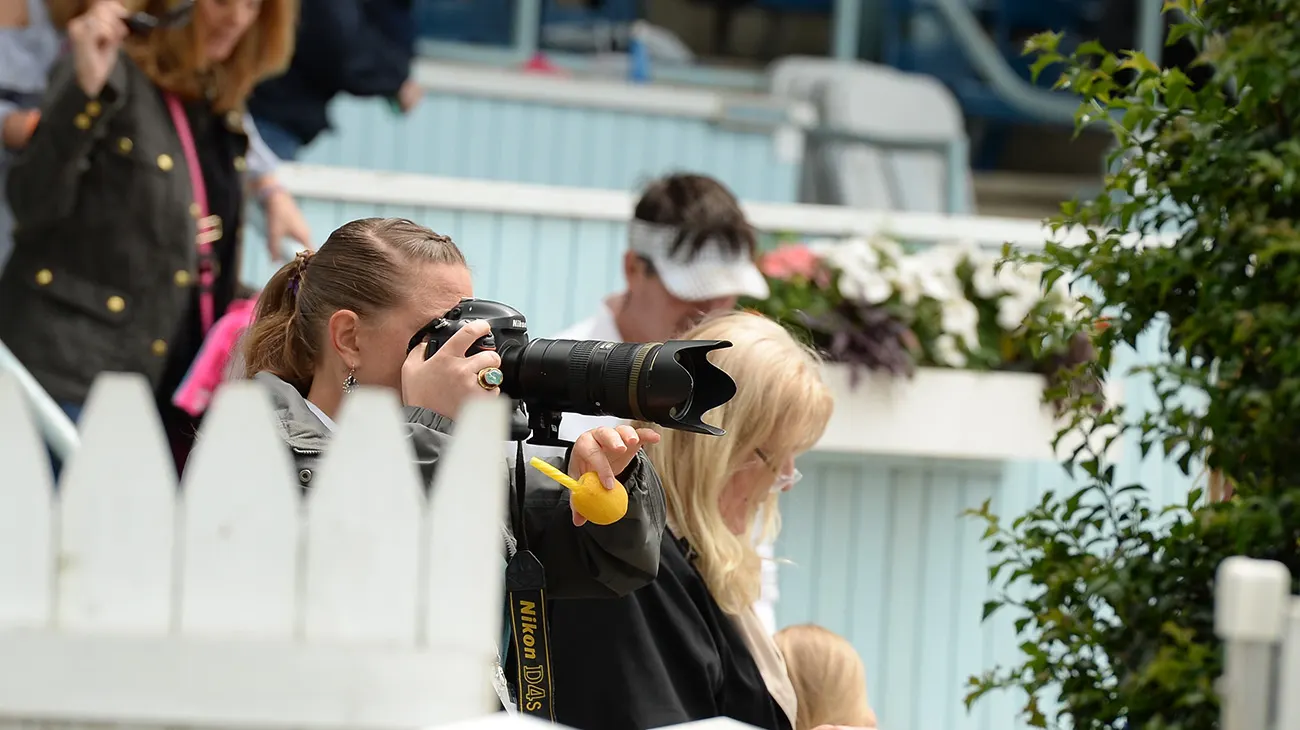
When did that evolution happen—the one where we look at a bad photo and think it’s great because it’s pretty? I know the age-old argument of, “One photo is just a moment in time,” but in this case it was multiple photos. It always seems to be the same group of people who hide behind that statement, and they’re the same people that always want to say that our new technology is so much better than the old: The breeding is better; the saddles are better, and the clothing is better. But I would be remiss if I didn’t point out: The cameras and the photographers are also better.
I have book after book in my library with extensive photos, some newer, some older, some dating back to the 1920s, all with absolutely stunning images of correct work and movement. We could still use them today as how-to images of what is correct. Back in those days, shutter speed and film development were very limiting factors in the amount of pictures a photographer could take at home or at a show. Why is it so easy to go back to the days of old and find such beautiful photos and classic examples of what is correct, and today they are few and far between?
How can we say it is a bad moment when that is the best moment the photographer can get with a rapid-fire shutter?
“How can we say it is a bad moment when that is the best moment the photographer can get with a rapid-fire shutter?”
ADVERTISEMENT
Or is it that the rider just keeps producing those bad moments—telling themselves it was just a moment in time and trying to get us to believe that as well? I don’t think any photographer is out to snap a bad photo of a horse. Those don’t sell, and no one wants them, so it is never in a photographer’s interest to keep catching the bad moment. Those bad moments are just extremely commonplace, so they are very easy to catch.
These days there is a lot of outcry on photos like that, with people saying the rider is abusive based on a photo, which is a fallacy but can be a truth at the same time. If we look at it as a way of life and a style of riding and see photo after photo, show after show, of similar images of a particular rider reproducing the same image on horseback, that argument can in fact stand. Not to mention, if that is the best they can produce in public, what are they producing and how are they riding at home?
Horse welfare is on everyone’s mind these days; it is unavoidable and everywhere. Using photos like the ones in this sale ad do not do our sport any justice or give us a leg to stand on in defense of our practices. Our sport is in turmoil right now, and there is a shift taking place, whether welcomed or objected to from those in the sport. The problem is the evolution has shifted, skewed and adjusted our ways of thinking and viewing the sport and the horses to such an extent we don’t always see, or want to see, the endemic problems that are here at our doorstep.
One recent example is that a very well-known bridle company from Germany started making a crank version of a drop noseband. Much like the old, studded cavesson nosebands that one can still purchase, they really have no place in our industry. If the bridle maker had horse welfare in mind, they wouldn’t make a crank drop noseband, since they would understand the purpose of that kind of noseband, and the pain that a tight drop noseband can produce, and they’d understand the damage that can be done when misused. This company is adding to the welfare issues seen by the public in production of a noseband like this. Shame on them for making one, and shame on us for buying them, and in turn letting them become part of this insidious evolutionary change.
Welfare And Art
These changes are again going on right under our noses, no pun intended, while we just keep talking about how great the sport is, how much we love our horses, and all the while, trying to silence the critics. We keep getting told by the royalty of the sport that they know better than the novice riders, and they love their horses. The public keeps hearing from the stars of the horse sports that these things are being blown out of proportion, and the public just isn’t educated. I very much beg to differ.
It has become so commonplace to have extremely tight nosebands as a way of life and training that these star riders, who are supposed to be the best and biggest advocates in our sport for equine welfare, are up in arms over having a device that can measure the tightness with a standardized gauge to tell us what common sense should really be telling us. I don’t understand the objection to the idea of a measuring device, and why people can’t get behind standardization, especially when they love the horses so much.
But just to be clear, tight nosebands are not actually the enemy here; not understanding that the tight noseband, blue tongue or strong contact isn’t fair to the horse is. This is a rider accountability issue. If welfare was a foremost concern to these riders, why aren’t they coming up with ways to better work with the higher-ups to be compliant and transparent with their practices? Why don’t they desire to better the sport with kindness toward their steeds and common sense to their approach? Where has the empathy gone, if it ever did exist, and how can some of these riders look at their own horses, or the horses of some of the other riders, and think, as the Fédération Equestre Internationale so daftly puts it, that those are “happy athletes”?
I am reminded of the fable, “The Emperor’s New Clothes,” with the basic moral being it’s important to speak the truth and not be afraid to challenge authority, even when it’s uncomfortable or unpopular. The story shows how people are often afraid to speak the truth, even when they see something is clearly wrong, because they fear being judged or ostracized. It demonstrates how vanity and a desire to maintain appearances can lead to deception and blind people to the truth. The little boy’s honest declaration that the emperor is wearing no clothes exposes the charade and reveals the emperor’s true state, demonstrating the power of truth. In the end, it is a cautionary tale about blindly following the authority or group thinking, and the importance of independent thinking and critical evaluation. The story sums up the way gaslighting works, which is a modern-day word used to basically describe the entire fable.
When lines of welfare start becoming blurred, the art gets lost, and in that loss, the correctness of form goes with it. Welfare and art go hand in hand, so if we lose the welfare, we lose the art, and we seem to be losing the welfare to the evolution that is taking place right in front of us.
“When lines of welfare start becoming blurred, the art gets lost.”
Somewhere in the performance and in the work, there has to be a willingness on a horse’s part to be our partner. The art of the sport is both in bettering the horse’s natural way of going and preserving and showcasing their character. Dressage that doesn’t do this simply isn’t dressage on a level that we should be striving for, agreeing with or believing in.
ADVERTISEMENT
Every few years someone seems to have a new revolutionary idea on how to blend art and sport together, but unfortunately those ideas always seem to lean heavily on gaslighting, crowd approval, TV ratings, excitement or dilution to make the sport more appealing to a larger audience. This also ends up feeding the bad and incorrect evolutionary change.
As one simple example: The Grand Prix test lengths have been shortened over the years, so the audience doesn’t get bored, and we can fit more riders into a day. We make the tests easier and lean more heavily on the excitement and drama far more than the harmony and training, which can now be added to the list of welfare issues for the horse.
It isn’t a new argument or a new problem. But there does seem to be a battle that is creating polarization all the way down to the grassroot levels. This battle is raging, and each team and side keeps pushing their beliefs and defending their own way of life. Some are more science-based and fact-driven, others speak purely from the heart, and then there are some from the side of human stubbornness—just not wanting change. The judges believe they are right in what they are scoring; the riders believe they are right in how they are training, and the people at home have yet another core value of beliefs that they hold strongly. No one wants to give in, since that either means a change in your sport, or a change in your art, and either way in the end, a change in our way of life with horses.
We often point a finger at the people at home or on the internet and say they don’t know since they are not out there doing, but they are not always wrong, and their opinion cannot always be invalidated because they haven’t cantered into a stadium at an Olympic Games. It is extremely naïve of us riders, trainers and judges to think we are the only ones with eyes, and sadly for that argument, we as a group often wear rose-colored glasses talking of the queens and kings of the sport, unwilling to see the big picture and go against the popular crowd.
We’ve all seen an uptick in the amount of comments and posts online, on both social media accounts and various websites, speaking out about welfare-related issues.
Everyone is fast to condemn someone speaking up or speaking out as crazy or vindictive, uneducated or stupid, often saying, “We haven’t seen you ride or compete at that level,” and in turn trying to invalidate what the commenters are saying. If the argument of, “You must have competed at a level to judge,” holds value, why do we have some upper-level judges that have not competed at the Olympics or World Equestrian Games? I don’t understand the hypocrisy there.
I am in the minority in the belief that you do not have to have ridden to that level to see what is correct and what isn’t—or at least I can respect someone’s educated opinion on why they think something is right or wrong.
To me, the only caveat to having an opinion on a subject is having an education on that subject, and I have to say, I am hearing a lot of educated opinions on the internet these days that we just can’t keep ignoring or blowing off because we haven’t seen these people ride horses. Not all these people are wrong.
Being in the sport for a long time, you see these changes taking place, and they will continue to do so. Much like the tide at the beach, it ebbs and flows, and with each wave, you see the landscape changing before your eyes. Slowly, steadily, it changes. We can get on board with these changes, or we can leave it up to the current and the weather to make these changes for us, later trying in vain to redirect the erosion.
It will be interesting to see where the future of our sport heads with welfare on the forefront. There’s a vocal majority acting like the changes are egregiously pushed upon them, and then what seems like a minority feeling they’re a welcomed relief, since we all want to see horse sports stay relevant and included in a world where we can all continue to ride, love and hedonistically enjoy our equine partners.
Grand Prix trainer and competitor Jeremy Steinberg was the U.S. Equestrian Federation national dressage youth coach from 2010 to 2014. A 1996 FEI North American Young Rider Championships individual dressage medalist, he is a former U.S. Dressage Federation Junior/Young Rider Clinic Series clinician. He credits much of his dressage education to the late Dietrich von Hopffgarten, his longtime friend and mentor. Today Steinberg runs a boutique-style training business in Aiken, South Carolina, and travels the country giving clinics. Learn more at steinbergdressage.com.