The post The Emperor Has No Clothes appeared first on The Chronicle of the Horse.
]]>I know I am not alone in my unending desire to learn more, see more and experience more with my horses. It’s a common theme that seems to speak to us all, proven to me in the hours we work to facilitate our relationships with our horses and friends in the equine world.
Most of us have the disease, if you will, and as life goes on, we constantly evolve in both our understanding of horses as well as our approach to them and the life around us, but we never seem to change the core force of what drives us.
We watch as the sport changes, even though our love for horses always stays the same, but I wonder if we truly realize how much we change in that same process, and if we are even aware of the sport’s evolution. Most of us in the industry start talking in terms of decades instead of years or seasons at a certain point, and it is without a doubt that over decades, things change. Within a season or a year or two, some of the changes don’t seem to be that noticeable, especially the small ones; they’re adapted to quickly, often passing by unnoticed, but sometimes insidiously becoming a new trend that everyone takes up, sometimes purposefully and sometimes completely unaware of that new adaptation.
A few weeks ago, I saw an advertisement with a rider in a top hat, and I was thinking how much uproar there was when the “look” was going to change as helmets became requirements. Fast-forward 10 years, and now a photo with a top hat-clad rider seems ancient, grainy and very outdated.
That was one of the noticeable changes, but there have been many small, seemingly insignificant ones that have also occurred. I wonder if we ever stop to think about how these changes have affected our sport and art, or are we just rolling with the punches, adapting and absorbing, dodging and swinging as needed, but nonetheless accepting them in the end for good or for bad?
A friend recently sent me an ad her trainer published of a young horse that she is selling, and I was taken aback at the photos used for the ad itself. The horse was clearly behind the vertical, low in the poll and high in the croup in all the photos, with a very poorly adjusted, low-fitting drop noseband. But at the same time, the horse looked gorgeous: muscled and shiny, with a nicely dressed rider who was decked out in sparkles and matching-colored show clothes.
It has become so incredibly commonplace to see horses in this condition, and the younger trainer, I am assuming, thinks the photos are great.
When did that evolution happen—the one where we look at a bad photo and think it’s great because it’s pretty? I know the age-old argument of, “One photo is just a moment in time,” but in this case it was multiple photos. It always seems to be the same group of people who hide behind that statement, and they’re the same people that always want to say that our new technology is so much better than the old: The breeding is better; the saddles are better, and the clothing is better. But I would be remiss if I didn’t point out: The cameras and the photographers are also better.
I have book after book in my library with extensive photos, some newer, some older, some dating back to the 1920s, all with absolutely stunning images of correct work and movement. We could still use them today as how-to images of what is correct. Back in those days, shutter speed and film development were very limiting factors in the amount of pictures a photographer could take at home or at a show. Why is it so easy to go back to the days of old and find such beautiful photos and classic examples of what is correct, and today they are few and far between?
How can we say it is a bad moment when that is the best moment the photographer can get with a rapid-fire shutter?
“How can we say it is a bad moment when that is the best moment the photographer can get with a rapid-fire shutter?”
Or is it that the rider just keeps producing those bad moments—telling themselves it was just a moment in time and trying to get us to believe that as well? I don’t think any photographer is out to snap a bad photo of a horse. Those don’t sell, and no one wants them, so it is never in a photographer’s interest to keep catching the bad moment. Those bad moments are just extremely commonplace, so they are very easy to catch.
These days there is a lot of outcry on photos like that, with people saying the rider is abusive based on a photo, which is a fallacy but can be a truth at the same time. If we look at it as a way of life and a style of riding and see photo after photo, show after show, of similar images of a particular rider reproducing the same image on horseback, that argument can in fact stand. Not to mention, if that is the best they can produce in public, what are they producing and how are they riding at home?
Horse welfare is on everyone’s mind these days; it is unavoidable and everywhere. Using photos like the ones in this sale ad do not do our sport any justice or give us a leg to stand on in defense of our practices. Our sport is in turmoil right now, and there is a shift taking place, whether welcomed or objected to from those in the sport. The problem is the evolution has shifted, skewed and adjusted our ways of thinking and viewing the sport and the horses to such an extent we don’t always see, or want to see, the endemic problems that are here at our doorstep.
One recent example is that a very well-known bridle company from Germany started making a crank version of a drop noseband. Much like the old, studded cavesson nosebands that one can still purchase, they really have no place in our industry. If the bridle maker had horse welfare in mind, they wouldn’t make a crank drop noseband, since they would understand the purpose of that kind of noseband, and the pain that a tight drop noseband can produce, and they’d understand the damage that can be done when misused. This company is adding to the welfare issues seen by the public in production of a noseband like this. Shame on them for making one, and shame on us for buying them, and in turn letting them become part of this insidious evolutionary change.
Welfare And Art
These changes are again going on right under our noses, no pun intended, while we just keep talking about how great the sport is, how much we love our horses, and all the while, trying to silence the critics. We keep getting told by the royalty of the sport that they know better than the novice riders, and they love their horses. The public keeps hearing from the stars of the horse sports that these things are being blown out of proportion, and the public just isn’t educated. I very much beg to differ.
It has become so commonplace to have extremely tight nosebands as a way of life and training that these star riders, who are supposed to be the best and biggest advocates in our sport for equine welfare, are up in arms over having a device that can measure the tightness with a standardized gauge to tell us what common sense should really be telling us. I don’t understand the objection to the idea of a measuring device, and why people can’t get behind standardization, especially when they love the horses so much.
But just to be clear, tight nosebands are not actually the enemy here; not understanding that the tight noseband, blue tongue or strong contact isn’t fair to the horse is. This is a rider accountability issue. If welfare was a foremost concern to these riders, why aren’t they coming up with ways to better work with the higher-ups to be compliant and transparent with their practices? Why don’t they desire to better the sport with kindness toward their steeds and common sense to their approach? Where has the empathy gone, if it ever did exist, and how can some of these riders look at their own horses, or the horses of some of the other riders, and think, as the Fédération Equestre Internationale so daftly puts it, that those are “happy athletes”?
I am reminded of the fable, “The Emperor’s New Clothes,” with the basic moral being it’s important to speak the truth and not be afraid to challenge authority, even when it’s uncomfortable or unpopular. The story shows how people are often afraid to speak the truth, even when they see something is clearly wrong, because they fear being judged or ostracized. It demonstrates how vanity and a desire to maintain appearances can lead to deception and blind people to the truth. The little boy’s honest declaration that the emperor is wearing no clothes exposes the charade and reveals the emperor’s true state, demonstrating the power of truth. In the end, it is a cautionary tale about blindly following the authority or group thinking, and the importance of independent thinking and critical evaluation. The story sums up the way gaslighting works, which is a modern-day word used to basically describe the entire fable.
When lines of welfare start becoming blurred, the art gets lost, and in that loss, the correctness of form goes with it. Welfare and art go hand in hand, so if we lose the welfare, we lose the art, and we seem to be losing the welfare to the evolution that is taking place right in front of us.
“When lines of welfare start becoming blurred, the art gets lost.”
Somewhere in the performance and in the work, there has to be a willingness on a horse’s part to be our partner. The art of the sport is both in bettering the horse’s natural way of going and preserving and showcasing their character. Dressage that doesn’t do this simply isn’t dressage on a level that we should be striving for, agreeing with or believing in.
Every few years someone seems to have a new revolutionary idea on how to blend art and sport together, but unfortunately those ideas always seem to lean heavily on gaslighting, crowd approval, TV ratings, excitement or dilution to make the sport more appealing to a larger audience. This also ends up feeding the bad and incorrect evolutionary change.
As one simple example: The Grand Prix test lengths have been shortened over the years, so the audience doesn’t get bored, and we can fit more riders into a day. We make the tests easier and lean more heavily on the excitement and drama far more than the harmony and training, which can now be added to the list of welfare issues for the horse.
It isn’t a new argument or a new problem. But there does seem to be a battle that is creating polarization all the way down to the grassroot levels. This battle is raging, and each team and side keeps pushing their beliefs and defending their own way of life. Some are more science-based and fact-driven, others speak purely from the heart, and then there are some from the side of human stubbornness—just not wanting change. The judges believe they are right in what they are scoring; the riders believe they are right in how they are training, and the people at home have yet another core value of beliefs that they hold strongly. No one wants to give in, since that either means a change in your sport, or a change in your art, and either way in the end, a change in our way of life with horses.
We often point a finger at the people at home or on the internet and say they don’t know since they are not out there doing, but they are not always wrong, and their opinion cannot always be invalidated because they haven’t cantered into a stadium at an Olympic Games. It is extremely naïve of us riders, trainers and judges to think we are the only ones with eyes, and sadly for that argument, we as a group often wear rose-colored glasses talking of the queens and kings of the sport, unwilling to see the big picture and go against the popular crowd.
We’ve all seen an uptick in the amount of comments and posts online, on both social media accounts and various websites, speaking out about welfare-related issues.
Everyone is fast to condemn someone speaking up or speaking out as crazy or vindictive, uneducated or stupid, often saying, “We haven’t seen you ride or compete at that level,” and in turn trying to invalidate what the commenters are saying. If the argument of, “You must have competed at a level to judge,” holds value, why do we have some upper-level judges that have not competed at the Olympics or World Equestrian Games? I don’t understand the hypocrisy there.
I am in the minority in the belief that you do not have to have ridden to that level to see what is correct and what isn’t—or at least I can respect someone’s educated opinion on why they think something is right or wrong.
To me, the only caveat to having an opinion on a subject is having an education on that subject, and I have to say, I am hearing a lot of educated opinions on the internet these days that we just can’t keep ignoring or blowing off because we haven’t seen these people ride horses. Not all these people are wrong.
Being in the sport for a long time, you see these changes taking place, and they will continue to do so. Much like the tide at the beach, it ebbs and flows, and with each wave, you see the landscape changing before your eyes. Slowly, steadily, it changes. We can get on board with these changes, or we can leave it up to the current and the weather to make these changes for us, later trying in vain to redirect the erosion.
It will be interesting to see where the future of our sport heads with welfare on the forefront. There’s a vocal majority acting like the changes are egregiously pushed upon them, and then what seems like a minority feeling they’re a welcomed relief, since we all want to see horse sports stay relevant and included in a world where we can all continue to ride, love and hedonistically enjoy our equine partners.
Grand Prix trainer and competitor Jeremy Steinberg was the U.S. Equestrian Federation national dressage youth coach from 2010 to 2014. A 1996 FEI North American Young Rider Championships individual dressage medalist, he is a former U.S. Dressage Federation Junior/Young Rider Clinic Series clinician. He credits much of his dressage education to the late Dietrich von Hopffgarten, his longtime friend and mentor. Today Steinberg runs a boutique-style training business in Aiken, South Carolina, and travels the country giving clinics. Learn more at steinbergdressage.com.
The post The Emperor Has No Clothes appeared first on The Chronicle of the Horse.
]]>The post USEF Approves First General Blood Rule appeared first on The Chronicle of the Horse.
]]>The change was approved last week at a USEF board of directors meeting. While some breeds and disciplines, such as dressage, already have blood rules in place, the modified GR843 will be the first specifically addressing blood for others, including show hunters.
“The rule is intended to protect horse welfare while acknowledging that a variety of situations may result in the presence of blood on a horse,” stated an Aug. 26 USEF press release announcing the change. “According to the updated rule, blood caused by the rider/handler or equipment requires the horse to be eliminated from the relevant class. The new rule language also states that the presence of blood on horses will be reviewed on a case-by-case basis by a licensed judge or ground jury.
“USEF recognizes that horses may sometimes bite their tongue or lips in the normal course of work,” the statement continued. “If minor blood is spotted in a horse’s mouth, the new rule allows the licensed judge or ground jury to rinse or wipe the horse’s mouth and permits the horse to continue if there is no further evidence of blood. If bleeding continues, the horse will be eliminated.”
In cases where a specific breed or discipline’s rules are stricter than the updated blood rule, such as in dressage, those more stringent rules will take precedence in competition.
In cases where blood is found on a horse competing in a class that is a qualifier for another class, a judge can stop a horse, examine it and determine whether it may continue, or examine it after the class if the blood is not spotted until then. In such cases, if the horse is allowed to continue and has otherwise qualified for the subsequent class, such as a championship or a jump-off, it may compete as long as the bleeding is resolved.
The rule will go into effect Dec. 1. USEF has created a “frequently asked questions” page to help answer questions about it.
Also at the Aug. 26 meeting, the USEF board of directors approved a rule change allowing points and money won earned in Channel II (Regional hunter and Jumper Level 1-3) competitions to be applied to both Channel I and Channel II Horse of the Year awards.
On Aug. 21, a presidential modification went into effect waiving the requirement to have the full qualifying criteria and official specifications posted on the USEF website 30 days prior to the start of the qualifying period for the USEF Pony Hunter National Championship and USEF Junior Hunter National Championship. According to the USEF’s release, this modification will allow organizers to incorporate feedback from this year’s championships into next year’s qualifications. Click here for more information.
The post USEF Approves First General Blood Rule appeared first on The Chronicle of the Horse.
]]>The post Manhattan Saddlery: A Tack Shop Outside Of Time appeared first on The Chronicle of the Horse.
]]>Amid the modern bustle of 24th Street in Manhattan stands a three-story relic of old New York—a shop that calls back to a time when city noise included hooves clattering on cobblestones. Founded in 1912, Manhattan Saddlery has been outfitting equestrians since horses were an integral part of daily life and the street was nicknamed “Old Stable Row.” It’s now the last shop of its kind in New York City.
“It’s of course really easy to forget—as I look out my window now and I see nothing but concrete, steel and glass and a bunch of cars—but I think it’s always been in the back of my mind that there’s a pretty rich equestrian past in New York City,” said Manhattan Saddlery owner Nick Tsang. “The National Horse Show was here, Madison Square Garden … and going back many, many decades, the city was all horse-powered over 100 years ago.”
The tack store, formerly called Miller Harness Shop, isn’t just a part of the historic landscape of Manhattan. For Tsang, the building holds a meaningful place in his own family history: Miller’s was a favorite destination for Tsang’s late mother, Yuen-Ron “June” Tsang.

“My brother, [who’s] six years older than me, is intellectually disabled, and my mom was kind of an early adopter to the idea of therapeutic riding,” Nick said. “She wanted us to ride as a family.
“Pretty soon I lost interest; my brother lost interest; my dad lost interest,” Nick continued. “And my mom really got into it. She ended up buying a horse, which became two, which became four.”
As her dressage obsession took root, June would regularly pop into Miller’s. During one visit in 2002, she was surprised to find merchandise dwindling and shelves bare; the store was closing. Nick says June wasn’t one to act on a whim, but she had the idea that owning her favorite shop “might be interesting.” She and Nick’s father, Kock-Yen Tsang, bought the store, which they later renamed Manhattan Saddlery. June fell ill in 2007 and Nick, who had recently graduated college, took over running the store. After his mother’s death a few years later, he remained devoted to keeping the shop open for the long haul—even if Nick isn’t the same equestrian that his mom was.
“The running joke is that I cannot think of another human on Earth who doesn’t actively touch horses, but who knows every single brand and owns several hundred thousand dollars’ worth of inventory,” said Manhattan Saddlery manager Laura Ratliff.
He may not be an active rider anymore—“I’m deeply allergic to horses; I can only be at the barn for so long, even if I’m stuffed to the gills with Allegra,” he said—but Nick, along with Ratliff and the Manhattan Saddlery staff, will happily talk shop.
“There’s a saying in the investment world, ‘You don’t want to be selling buggy whips in the age of the automobile,’ and as New York City’s pre-eminent seller of literal buggy whips, I think the challenges are obvious,” Nick said with a laugh.
When people drop in, Ratliff says they’ll often share how the long-standing store has played a role in their lives. “We get customers who come in and say, ‘Oh, my mother shopped here in the ’70s,’ or, ‘I got my first tall boots here in 1986,’ ” she said. “The store was kind of the go-to.”
Even Ratliff, who spent her childhood thousands of miles away from New York City, was aware of the legacy of the original shop.
“The Miller’s catalog was kind of like the Sears catalog growing up, right?” she said. “I grew up in Texas, but I remember flipping through it and circling things.”
Now, getting to help run the store today, she feels the magic first-hand that once endeared her to the store from afar.
“I think it has a really unique atmosphere that can only be attributed to it being in New York City,” Ratliff said of the shop’s charm. “I always joke that when I turn the lights off at night, it kind of feels like ‘Night At The Museum’ to me. There’s just this ethereal glow. I always think it looks beautiful from the street. I’m just kind of humbled when I close the store down at night.”
Nick, who also works as a real estate developer, appreciates the responsibility of preserving the store’s old New York charm.
“I think it has this feeling where the store hasn’t been touched for a while—but in a good way,” Nick said.
“You know, it’s like you walk through the doors, you get buzzed in, and it’s really different from the streetscape and the surroundings outside.”
Being in a fashion- and film-centric city, not every Manhattan Saddlery shopper is an equestrian. It’s also frequented by stylists to source props for the occasional television show with a riding scene, or a magazine shoot with a preppy feel.
“We’ve had a stylist for ‘[Law & Order] SVU’ who comes in pretty regularly,” said Ratliff. “The most recent set was two stylists from the new Jon Hamm show called ‘Your Friends & Neighbors.’ ”
They’re happy to share the store with New York—whether stylists or riders, tourists or locals. But inside the shop, however much the city changes around it, there are a few things that will also never be for sale: a cast iron horse gifted to founder Jack Miller; four antique carousel horses frozen in their gaits; and June’s personal collection of Chinese horse statues.
“People routinely ask to buy them, too, and get rebuffed … There are some things in that store that, for Nick, absolutely do not have a price,” Ratliff said.
This article originally appeared in the July 2025 issue of The Chronicle of the Horse. You can subscribe and get online access to a digital version and then enjoy a year of The Chronicle of the Horse. If you’re just following COTH online, you’re missing so much great unique content. Each print issue of the Chronicle is full of in-depth competition news, fascinating features, probing looks at issues within the sports of hunter/jumper, eventing and dressage, and stunning photography.
The post Manhattan Saddlery: A Tack Shop Outside Of Time appeared first on The Chronicle of the Horse.
]]>The post Opinion: We Can Remedy The Scourge Of Overuse In Horse Showing appeared first on The Chronicle of the Horse.
]]>Unfortunately, the town hall failed to address one of the most significant root problems of horse abuse: the overuse of horses in jumping-based competition for economic and personal gain.
Most USEF stakeholders have a conflict of interest in this discussion: The more that horses compete in USEF competitions, the more money is made by competition managers, trainers, riders, owners, veterinarians and USEF. Each entity benefits economically from horses being shown more, so there is an inherent bias in avoiding a solution to the overuse problem.
Too Many Competitions, Too Many Classes
USEF rules do not restrict the number of classes that a hunter/jumper horse can compete in per day, week, or month. The recently updated GR Subchapter 8-F Welfare of the Horse—specifically GR838.1—addresses overuse and unethical treatment of horses. But without an objective way to assess what constitutes overuse, it is a meaningless rule subject to varying interpretation. The matter is only really brought to the fore after a horse is injured. USEF maintains a record of every rated class a horse contests, so competition frequency can easily be monitored.
A 2023 USHJA rule change proposal attempted to cap the number of over fences classes horses could participate in at eight per day, a shockingly high number. However, due to challenges in execution and broad disagreement on what the limit should be—including whether it should vary based on fence height, class type or competition format—even that proposal was ultimately withdrawn following extensive debate at the USHJA Annual Meeting. It’s not surprising the proposal was deep-sixed, but it is now high time for USEF to enforce meaningful limits on the number of classes in which horses can compete on a daily and monthly basis.

The economics of the sport make addressing competition overuse challenging, because it is not in the interest of many of the parties involved to introduce class limits. Show managers make more money on entry fees with each class a horse enters, so it’s hard to see them supporting class limits.
Trainers make more money with each show a horse attends and each day a horse shows, so one can’t expect them to support class limitations. (Plus, when a horse becomes injured, the trainer’s quest to buy a replacement often begins, once again to their economic benefit.)
Veterinarians are also complicit in competition overuse because of the immense pressure they face to get horses back in the ring. Owners often prefer not to hear that their horse needs a few months off when an injection or other treatment can get them back competing more quickly. A veterinarian is somewhat beholden to the owner’s demands to achieve results fast. If a veterinarian is reluctant to treat the horse aggressively, the owner may well find another veterinarian who will. One cannot, therefore, expect veterinarians to support class limitations readily.
There is no union for horses, but there are examples of fair horse usage rules already in place, including New York City carriage horses, who are not permitted to work for more than nine hours in any 24-hour period (including waiting time). At U.S. Dressage Federation-recognized competitions, governed by USEF rules, horses are limited to a maximum of three classes per day from intro through fourth level and a maximum of two classes a day at Prix St. Georges level and above. Pressure to overuse horses is a recognized problem for which some practical solutions have already been found, including by USEF in certain disciplines.
Like other professional sports, there is generally no longer an off-season for horses. National and international competitions are held year-round, unlike in the past when the show season wound down after Toronto’s Royal Horse Show in November and restarted in Florida in February. During the winter, one- and two-day schooling shows were the only things on the calendar. Now, there are high-level shows all year. Keeping a horse out of the ring or resting it for a few months is hard when there are multiple pressures to show. Yet that is exactly what needs to happen.
Supply-side economics predicts that the greater the quantity of classes available, the more classes horses will compete in. In addition, the more shows a horse competes in, the more competition fees USEF receives. USEF year-end awards also create pressure to overuse horses in competition. More placings mean more year-end points. The Fédération Equestre Internationale ranking list further exacerbates horse overuse because riders must constantly compete to stay high enough in the rankings to qualify for the most prestigious events. Even for our top riders, the pressure to stay in the ring is immense.
For those fortunate riders who have multiple horses, overuse is less of an issue because they can rotate their horses among shows. But for most others, there is a necessary tension between what is right for the horse and what the rider—who needs to gain experience, win year-end points, and/or maintain a ranking list position—wants.
Fair Treatment, Fair Maximums
However, horses have limited life spans. The length of a horse’s competitive career depends not only on its physical conformation, but even more on the quality of its management throughout its active years. Overuse is a significant cause of injury that curtails many equine athletes’ careers. The show environment is challenging—both physically and mentally—and simply getting to competitions can also include long journeys for our equine friends.
Clearly, there should be some limit on the number of competitive rounds a horse is allowed to do; it is both ethical and responsible. But how might that work? There are ways that USEF can encourage sensible and reasonable limitations on equine competitive stressors. Developing a rule that accommodates the need to show while capping the number of classes the horse competes in would address the issue.
Most USEF stakeholders have a conflict of interest in this discussion: The more that horses compete in USEF competitions, the more money is made by competition managers, trainers, riders, owners, veterinarians and USEF.
When the USHJA withdrew the class-capping rule in 2023, one sticking point cited was that because entries are submitted in advance, some horses are entered in more classes than they will actually contest and then scratched from some closer to show day. However, USEF tracks entrances into the ring and the subsequent results, which eliminates confusion on this issue.
At a minimum, USEF could discourage overuse by tracking the daily number of classes and monthly number of shows a horse contests. It could decide that points gained outside of reasonable use parameters would not count toward year-end or ranking points, or combinations could be ineligible for prize money. It could notified owners if their horse exceeds fair use limits.
Obvious overuse is currently prohibited by USEF regulations under cruelty and abuse prohibitions, but enforcement is on a case-by-case, subjective basis and is after the fact, which is unfortunate for the horse involved. Encouraging appropriate use with these measures strikes a decent balance but remains a retroactive solution.
Class Limits Are The Way Forward
If we really want to tackle the overuse issue, class maximums are the way forward. So, how might this work? A greater number of classes would reasonably be permitted at the lower levels; for example, a pony competing in hunter and equitation classes can comfortably contest more classes per day than a grand prix jumper. A basic formula could be introduced to govern the various jumping levels, with varying limits on permitted class numbers.
Reasonable maximums for the following could be codified as follows:
- Number of shows in a month
- Number of consecutive days of showing
- Number of classes per day based on course height
For example, a general restriction of three shows per month could be implemented, with a maximum of three consecutive days of showing permitted, and—dependent on fence height—a maximum number of jumping classes per horse per day:
- Course above 1.30 meters: Two classes
- Course 1.20 to 1.30 meters: Three classes
- Course below 1.20 meters: Four classes
These are not draconian limitations; they would still allow horses to compete in a generous monthly maximum of 24, 36, or 48 classes, depending on the level. We could also hammer out a fair formula for horses competing across the different levels. While there is room for debate, the principle is simple: we can’t keep pounding our horses into the ground.
It’s high time we challenged ourselves to ensure horse welfare is safeguarded from all angles. Even if instances of overuse are few, for affected horses, it is unacceptable. We all have differing experiences, so active participation in USEF’s town hall meetings is essential to gain perspective and opinions from peers. Limitations on competitive rounds may provoke some pushback, but it moves the welfare dial in the right direction. Horses are not bicycles whose parts can be replaced if worn out or broken. They deserve to have meaningful protections against overuse, and USEF is best positioned to spearhead this progressive step.
Armand Leone of Leone Equestrian Law LLC is a business professional with expertise in health care, equestrian sports and law. An equestrian athlete dedicated to fair play, safe sport and clean competition, Leone served as a director on the board of the U.S. Equestrian Federation and was USEF vice president of international high-performance programs for many years. He served on the USEF and U.S. Hunter Jumper Association special task forces on governance, safety, drugs and medications, trainer certification, and coach selection.
Leone is co-owner at his family’s Ri-Arm Farm in Oakland, New Jersey, where he still rides and trains. He competed in FEI World Cup Finals and Nations Cups. He is a graduate of the Columbia Business School in New York and the Columbia School of Law. He received his M.D. from New York Medical College and his B.A. from the University of Virginia.
Leone Equestrian Law LLC provides legal services and consultation for equestrian professionals. For more information, visit equestriancounsel.com or follow them on Facebook at facebook.com/leoneequestrianlaw.
The views expressed in opinion pieces are those of the writers and do not necessarily reflect those of The Chronicle of the Horse.
The post Opinion: We Can Remedy The Scourge Of Overuse In Horse Showing appeared first on The Chronicle of the Horse.
]]>The post Does The New USEF Position Statement On Horse Overuse Go Far Enough? appeared first on The Chronicle of the Horse.
]]>The court had the difficult task of trying to precisely define obscenity, and why the film did or didn’t meet that description. But rather than trying to construct a strict definition of obscenity, Justice Potter Stewart famously and simply said: “I know it when I see it.”
The stakes aren’t constitutional—and the proposed definitions won’t make one blush—but the long-running discussion over whether the U.S. Equestrian Federation should establish a rule limiting the number of classes a horse can do at a single hunter/jumper show comes down to a similar assertion. In this case, however, “I know it when I see it” refers to horsemanship—or the lack thereof.
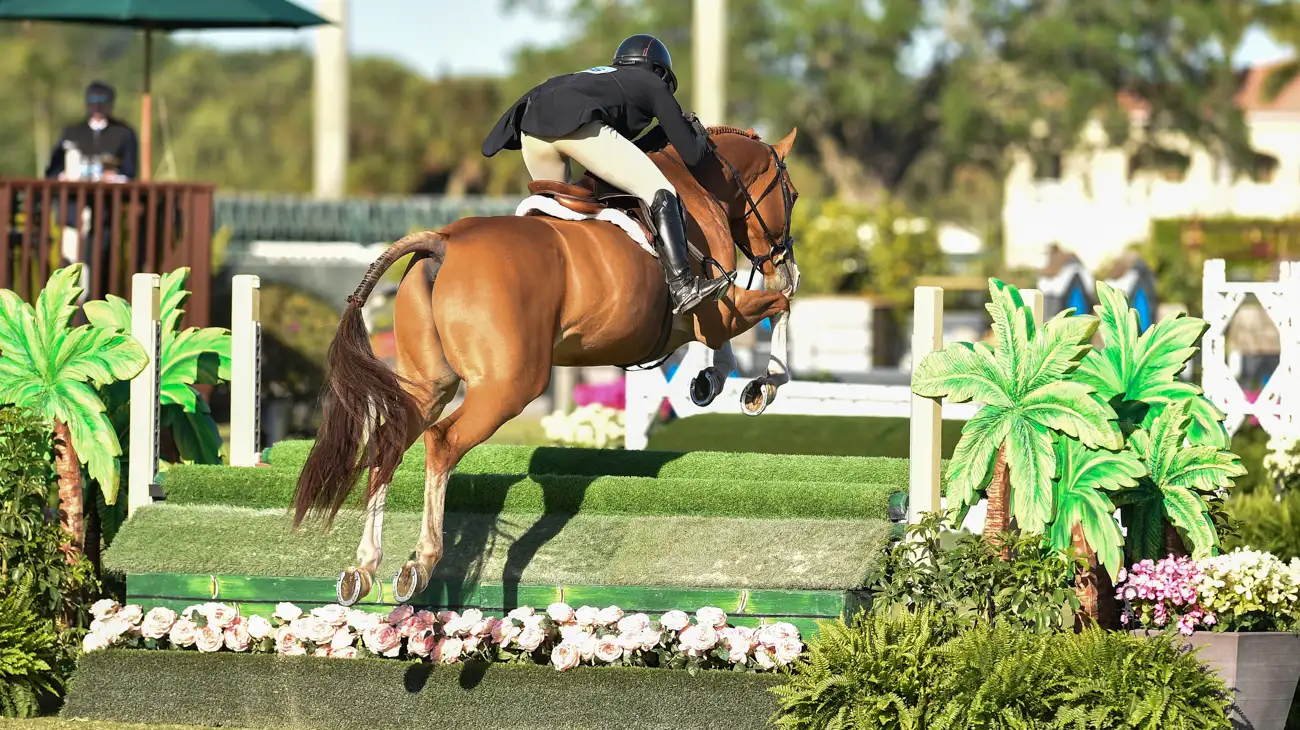
The challenge has always been in setting a specific number of classes, especially considering the huge range of factors that determine whether a horse or pony’s show schedule is “too much.” What might be exhausting for a thick-bodied warmblood might not even faze a Thoroughbred. Should the limit be the same at 2’3” as it is at 3’6”? Does a class limit just mean that a horse will be longed for an hour to get it quiet, and does that defeat the purpose?
The topic has often come up at U.S. Hunter Jumper Association town halls and other discussions of horse welfare, where everyone seems to agree there are a very small number of problem competitors and many people urging governing bodies to protect both the horses and the sport in this age of heightened attention to welfare issues.
At USEF’s mid-year board meeting in June, the board of directors approved several extraordinary rule changes related to horse welfare, including the implementation of hair testing and stricter rules regarding a horse returning to competition after a collapse. The board also adopted position statements on horse welfare and overuse.
The overuse position statement reads in part:
“Indicators of overuse include a decline in performance, physical capabilities, movement, and/or mental well-being. Observable signs may involve physical signs of discomfort, exhaustion, lameness, changes in stride, resistance to move forward, use of both leads, and deterioration of jumping style. This is not an exhaustive list of symptoms or combinations thereof and it is imperative that officials use their experience, horsemanship skills, and equine knowledge to make an informed, non-biased decision regarding the horse or pony’s health, safety, or well-being.”
The position statement isn’t a rule and doesn’t set any numerical class limits, but it does put into black and white the federation’s support for officials who feel horses are being overused and want to step in. Essentially, it backs them up when they say, “I know a lack of horsemanship when I see it.”
Input From Veterinarians
In March, USEF held a veterinary summit in Ocala, Florida, attended by about 30 veterinarians from around the world, USEF CEO Bill Moroney said.
“[Overuse] was one of the topics that came up there,” he said. “And at the end of the day, everybody realized: Setting a number is not the easiest thing to do in the world. It’s pretty challenging, right? Because horses, like people, are all different,” Moroney said. “It’s very individualized by horse and by breed or discipline as to what would constitute overuse.”
USEF put out a white paper from the veterinary summit summarizing the discussions. “It includes a section in it about overuse of horses and the challenges of just setting a defined limit of, let’s say, three classes a day or something like that, or per competition, and how that doesn’t really satisfy things,” Moroney explained. The position statement—which USEF collaborated closely with Equestrian Canada to write, Moroney said, noting that organization put out a similar statement—distilled the discussion from the summit into a checklist (albeit incomplete, he stressed) that officials and competitors alike could use.
“We wanted to give people an understanding of the signs of overuse: How do you know that a horse is in distress? What are the signs of that you’re seeing? Potentially an alteration of gait. You’re seeing a reduction in performance. You’re seeing signs of fatigue, etcetera, that are occurring,” he continued. “And that way, the entire community would have something to go to, to be able to understand better how to calculate and manage the use of the horse and ensuring that we’re not overusing them.”
“We wanted to give people an understanding of the signs of overuse: How do you know that a horse is in distress? What are the signs of that you’re seeing? … [T]hat way, the entire community would have something to go to, to be able to understand better how to calculate and manage the use of the horse and ensuring that we’re not overusing them.”
Bill Moroney, USEF CEO
Another important takeaway from the summit was the importance of frequent evaluations and conversations with a horse’s veterinarian, Moroney said.
“Part of the process is making sure that the horse is getting regularly attended to by a veterinarian at home, right?” he said. “[There should be conversation] between the vet and the trainer and the owner of the horse, so that everybody’s on the same page as to what that horse’s fitness level is, and how it is responding to the amount of of competitive experiences that that trainer and rider are utilizing the horse for, and just making sure its well-being comes first—and that has to include those regular veterinarian checks and those conversations between all of the parties to assess where that horse is at.”
Moroney said it’s important for competitors and trainers to educate themselves on the statement and discuss it with their veterinarians. “We have a very robust set of mechanisms to report situations where they feel a horse’s welfare is being compromised,” he said “I think it’s incumbent then on somebody who is at a competition to understand what they’re seeing and what they’re reporting on, and does it rise to that level. I also think it’s very important for people to share that statement with their vets so the vets know the conditions under which they’re showing and training and all of that, so that they can help them understand the nuances of seeing those signs [of overuse]. We can give them a statement, but I think their veterinarian, that’s the normal person caring for that horse on a regular basis, can help them understand the nuances.”
Moroney said the feedback from officials has been positive so far, and that USEF is working on support resources for officials to help them address concerns with competitors in productive ways.
“I think people always want something extremely definitive that you can have in black and white, and no shades of gray. And I think the hardest thing is officials are put into a position of having to make judgment calls, and we live in a world where there are a lot of challenges to any decision anyone makes, right? Which makes it very difficult,” he said. “But I think that’s why it’s so important to try to give them as much information and as much education [as possible] about how to deal with the situation.”
It Comes Down To Conditioning
USHJA President Britt McCormick said the organization was involved in discussions at USEF that led up to the publication of the position statement. He feels it strikes a healthy balance between acknowledging that some competitors may be asking horses to do too much while also giving officials the latitude to use their discretion rather than enforce an arbitrary number of classes. He emphasized that overuse has less to do with a number of classes than whether the horse has been appropriately legged up for that workload.
“If a horse is conditioned for the job it’s being asked to do in the field, it is almost impossible to overuse a hunter or a jumper,” McCormick said. “So when you take a look at the gamut of what horses do for a living—working ranch horses, endurance horses, even dressage horses, eventers—hunter/jumpers, on the use level, are way low. Most of them don’t even break a sweat. If they do, it’s short bursts, intermittent. A class lasts, you know, 90 seconds, maybe two minutes at most.”
When discussing the issue with those who have lobbied for USEF to set a numerical limit, McCormick said they usually offer about 12 classes per show as a logical cap.
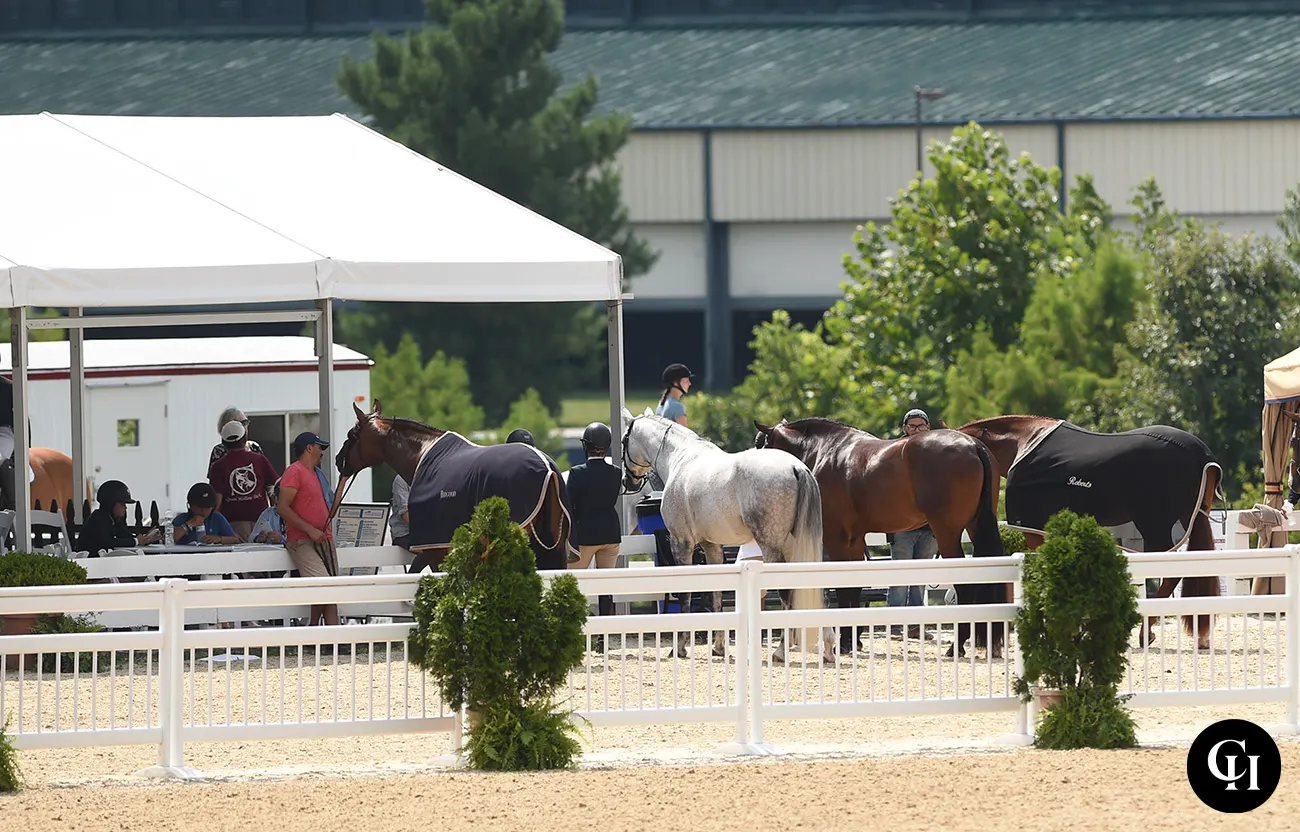
“Let’s just play this out: So let’s say your typical 3’3” green has its secondary job as a children’s hunter or an adult hunter or whatever. So five classes plus two warm-ups, let’s just say for the green division, that takes place on a Wednesday and a Thursday. So that’s seven [classes],” he explained. “Then it maybe has a Friday derby day—that’s two trips—and let’s say it does the children’s hunters and equitation. So five more for the division, maybe two more warm-ups and five medals. You’re hovering around 22 classes over a five-day period, [about] four classes a day. It’s less than 30 minutes of work.”
Another theoretical example that is often offered is “school horses that go around 18 times over crossrails,” McCormick said.
“Again, if they’re conditioned for that job, I don’t have a problem with it. What I have a problem with is when somebody does one of two things: Either the horse is not conditioned for the job it’s being asked to do, [or] it’s stressed,” he said. “So, visible signs of stress, that’s no good. And I think that’s something that, if we’re in the field [at a competition], you walk up to those people and you say, ‘I’m sorry, your horse looks like it’s stressed. You need to get off and go put it up.’ That can be riding, that could be longeing, that could be sitting on it at an outdoor horse show for three or four hours, and it hasn’t done anything, but it’s never had a chance to get a drink of water. It’s never had a chance to go back in the stall and be by itself for a second. There are all different levels of stress; it’s not just classes.”
While the position statement encourages officials to use their discretion, the lack of a hard limit does allow leeway for competitors to dispute their assessment, McCormick acknowledged.
“I think the judges do [feel empowered to act] in the hunter world. And, I mean, I’m a judge, so I don’t mind saying it. I think most of us would go, ‘Hey, look, we don’t want to see that horse again because it looks fatigued,’ ” he said. “I think the stewards, obviously, they always feel better with some kind of a rule in place, but I think that the ones I’ve talked to feel better about making the call. And it’s not a punishment; I think everybody comes to it from an education standpoint. So the [statement] is made, I think, to be educational and give a little bit of bite if you need it.”
A Lack Of Education
Cricket Stone is a USEF C1 ‘R’ steward and sits on the USHJA board of directors. If she has concerns about a horse’s workload at a competition—usually brought to her attention by a judge—she said she approaches it with the goal of education, and brings the show veterinarian or another steward along when she voices her concerns.
“I just approach the trainer and say, ‘You know, part of my job is education. I am concerned that your horse has been entered in a number of classes today,’ ” she said, adding that time spent in warm-up and standing around at the ring factor in as well. “If it comes down to them getting a little belligerent, which sometimes they do, I usually have spoken with management about these things, and management will usually back me up, or back the vet or the judge up, and just say, ‘Hey, you know, this is something that we’re working on combating in our sport right now, is how we look to the public. It doesn’t mean that you don’t see it in a different light. However, to the uneducated eye, this is what is being seen, and this is not a good look for the sport right now.’ I always try to fall back on education before going to any kind of a warning card or something like that, because 99% of it is honestly lack of knowledge.”
She calls the position statement a good start but noted that it’s not going to solve a lack of knowledge among trainers.
“You can’t regulate horsemanship. People feel like we can regulate number of classes, number of jumps, things like that, but what you’re really trying to do is regulate horsemanship, and that’s an educational thing, not a regulation issue,” she said. “I learned from very, very good horsemen who taught me about horse welfare before everything else. That’s so important, because you cannot take a horse show career and turn into profession without the knowledge to back that up, and unfortunately, that’s what’s being done right now. We need to get back to educating. We need to get back to mentorships. We need to get back to internships, apprenticeships, whatever it takes, where people learn the basics of the career, which involves the care of the horse, the well-being of the horse, prior to showing.
“For right now, as a steward, I’m very appreciative of this statement, because it gives me, if nothing else, backup from USEF if I say something.”
Cricket Stone, USEF steward
“This will never happen, but I’m a huge proponent of some kind of certification or licensure for trainers, because right now, I mean, anybody can be a professional. They just check the box,” she continued. “There’s no regulations in place for that, which is what needs to happen in order to make the real change that we need to see in the business right now. So for right now, as a steward, I’m very appreciative of this statement, because it gives me, if nothing else, backup from USEF if I say something.”
Everything Comes Back To Horsemanship
Sue Lyman has operated West Riding, a training business near Middleburg, Virginia, for over 30 years. She’s also chair of the USHJA’s Horse And Rider Advocates Committee. She agrees with Stone that there’s a significant lack of education contributing to the issue, and has even advocated for a program similar to SafeSport that people would have to complete before they show, demonstrating knowledge of welfare rules, for example, or even just schooling ring etiquette and proper longeing techniques.
“The problem with education is people don’t really go out to get educated unless it’s going to benefit them,” she said. “So I think that people who are good trainers, who do this because they like horses, are aware of that issue, and we get frustrated that people … don’t learn and do the best thing for the horse. Because, I mean, that’s how we were brought up, and that’s why we do it.”
Lyman also thinks that writing a rule setting class limits would be difficult, but said she felt horse show officials were generally up to the task of policing overuse.
“I think that show managers and stewards are super helpful,” Lyman said, noting that she’d gone to show management about longeing issues in the past and found them to be proactive when an issue was brought to their attention.
“I think DiAnn Langer, in her article that she wrote [about speaking out against abuse], said people need to stand up for the horses. Like, why are we so afraid about what’s going to happen to us? Gosh, get a backbone. If you like horses, speak for horses, right?” she said. “I think if you are respectful, you know, definitely go to the stewards and go to show management, try it. You can’t write a rule for every single little thing of abuse; if you see something that’s abusive, then report it.”
Back in 2022, trainer Miranda Scott was so disturbed by incidences of overuse that she wrote a letter to the USHJA membership in In Stride magazine.
“ ‘A horse only has so many jumps in him,’ ” she wrote. “This is a statement I often heard from the great old horsemen who shared their wisdom with me as I was growing up.”
Scott, who taught at Meadowbrook Stables in Chevy Chase, Maryland, for 16 years and counts Kathy Kusner as one of her mentors, also sees a lack of horsemanship as a root cause.
“I really take horsemanship seriously. I see some of these young professionals don’t take care of the horses,” she said. “That’s why I wrote that article. So many of these younger professionals sort of go through horses, you know, and if that’s how your business model works, so that every time you break one, you gotta go buy a new one and can make that commission. It’s not about the longevity of the horse and the quality that the horse has so it can have a good retirement. I’ve just seen so many very bad horsemanship decisions, in very nice places.”
Scott said she’s skeptical of trying to set a limit on classes through a rule, since situations can be so variable. “I think creating a rule that people will abide to [is difficult], because even [though there’s] a rule on drugging, they still seem to be drugging ‘em!” she said.
“I wish we had the kind of integrity in our sport that people would just do the right thing to do the right thing instead of trying to cheat. There are always those cheaters. I would like to believe that there’s more people out there that are trying to do it right than wrong. But I think we have to talk about [horse welfare] and … [create] a positive, peer pressure to do right by the horse.”
Words Aren’t Enough
Jay Duke, a former professional hunter rider who is now a clinician and course designer based in Calgary, Alberta, has been advocating strongly for a rule with a limit on the number of classes. He’s also the founder of Safe Horse, a non-profit advocating for horse welfare and well-being in equestrian sport. He said he’d like to see USEF—and Equestrian Canada—do much more.
“It all sounds good, but it’s not actually helping the horses,” he said. “Something concrete needs to happen to make it better, because every single week all across the country, there are horses being shown in excess … not a lot of horses. It literally is like 4% or less, but it’s still happening to some horses, and the federations need to do something concrete to help these horses out. That’s No. 1. And No. 2 is they need to do something concrete to show the world that they care about the health of the horse and are vested in their interest in the horse, and instead of just saying fancy words and not actually doing anything.”
Like other members of the industry interviewed for this article, Duke pointed the finger squarely at a loss of horsemanship, saying simply: “There used to be better horse people. What’s happened? You know, the industry has gotten very large. There is no regulation on training and who can be a trainer,” he said. “There’s more and more horse shows, and there’s more and more disposable income for people to go through horses faster, and not as much need to keep horses sound and going for longer terms, because people can just buy another one. So without question, it’s become a bigger deal. It’s happening more often than it used to for all those reasons.”
Duke, who is on the USHJA Horse And Rider Advocates and Safety Committees and has been working with USEF and USHJA on the issue, said he agrees with McCormick that horse show officials should have the discretion to step in when they think they need to, but that there are complicating factors.
“No. 1 is the judges and the stewards are hired by the horse show management,” he said. “Horse shows are a pretty big business … it is in their best interest that horses are entered in more classes from a financial perspective, I’ve been in horse shows where horses and ponies are entered in 25-plus classes, and I’ve never seen horse show management do a thing. I’ve seen that dozens and dozens and dozens of times. I don’t want to make the horse show managers the bad guy, but they’re in the business of making money.
“So if the stewards and the judges were assigned by USEF, I would have no argument with that [position] statement. They’re not,” he said. “Because, of course, you know, stewards and judges are also in business and they want to be rehired by the horse show. But it’s in their best interest to make the show manager happy, and [if] you’re taking money away from show management, then they’re not going to be happy and you won’t get rehired. It’s a very flawed system.”
Duke also takes issue with putting this welfare issue so squarely on the shoulders of judges and stewards, who already have so much on their plates and are overworked and underpaid.
“Every professional will tell you this; I just say it how it is: I have seen horses in under saddle classes given ribbons that were lame. Hundreds and hundreds of times. It should not be on the judges to make that call,” he said. “Judges already have, typically, two to four cards running at a time. They work from 7:30 a.m. until dark. They have super long hours. And now you’re saying, ‘Oh, let’s give them another responsibility, be responsible for horse welfare.’ That, to me, isn’t realistic or fair at all.”
It’s similarly unrealistic to expect stewards to be able to police this issue, he added. “They’re grossly underpaid. They’re overworked. There’s not enough of them at the horse shows. Some of them don’t know what a lame horse is,” he continued. It’s not realistic to expect a steward to have the time to go through a list of 600 horses to see which ones were entered in too many classes, he said.
“It would have to be pointed out to them. And I do know, again, dozens of examples where it is pointed out to them, and they don’t do anything. I’m not here being negative towards stewards individually, but that’s just not a realistic fix at all,” he said.
Through conversations with dozens of show managers, trainers, riders and others, Duke has come up with his own proposed class limits, and has started a petition urging USEF and Equestrian Canada to adopt them, writing: “There are countries that do impose class limitations, it is time that the USA and Canada do what is best for our sporting partners, and for the horses that do so much for us.”
“I would prefer that that did not need to happen. It obviously must happen for the sake of the horses,” Duke added. “But I wish there was the education, the certification, the horsemanship… I wish people loved the horses more. There’s a lot of professionals in the sport and there’s a lot of owners in the sport that the best interest of the horse is not what they’re there for. I’m not saying anything radical here; I’m just saying all the quiet stuff out loud.”
Duke said he’s confident that the issue of overuse will at least be addressed in educational programs, even if USEF does not end up supporting the implementation of a rule right now. The limits he’s proposed are a starting point, he added.
“I’m not saying it’s perfect, and maybe it could use some tweaking … or adjustments, but it is something which I feel is a compromise, which stops the worst of the abuse. It also shows the public that we care about the horses,” he said, adding that many participants don’t understand the precarious position horse sports are in.
“People don’t realize how this sport is in danger.… Just look at horse racing. And if you don’t understand that, do your history on where horse racing was 100 years ago and where it is now,” he said.
Duke emphasized that he feels the overwhelming majority of those involved in horse showing still put the horse first, and are more than happy to scratch some classes if they think a horse has done enough in a day.
“We’re talking about a very small minority of people that are abusing the horses,” he said. “I mentor and work with a lot of trainers in their 20s and 30s, and to a fault, they all [are willing to scratch classes when a horse seems tired], every single one of them, not even a question. This [proposed rule] is for the 5%.”
The post Does The New USEF Position Statement On Horse Overuse Go Far Enough? appeared first on The Chronicle of the Horse.
]]>The post USEF Veterinary Summit Outlines Best Practices For Sport Horse Care appeared first on The Chronicle of the Horse.
]]>The U.S. Equestrian Federation host a summit in which veterinarians convened to discuss navigating those sometimes conflicting pressures with science-backed care, and recently released a white paper summarizing the conversation “to serve as best practices for veterinarians treating international sport horses, including guidance for veterinarians treating national horses at all levels of competition.”
The 2025 Veterinary Summit, held in March in Ocala, Florida, welcomed 28 veterinarians and some USEF senior executives. It was one outcome of the Chromatic Fund, an initiative inspired by the tragic death of the show jumper Chromatic BF. The late horse’s owner and breeder, Kc Branscomb, collaborated with USEF, the American Association of Equine Practitioners, and the Foundation for the Horse to create the fund, which supports horse welfare and education initiatives.
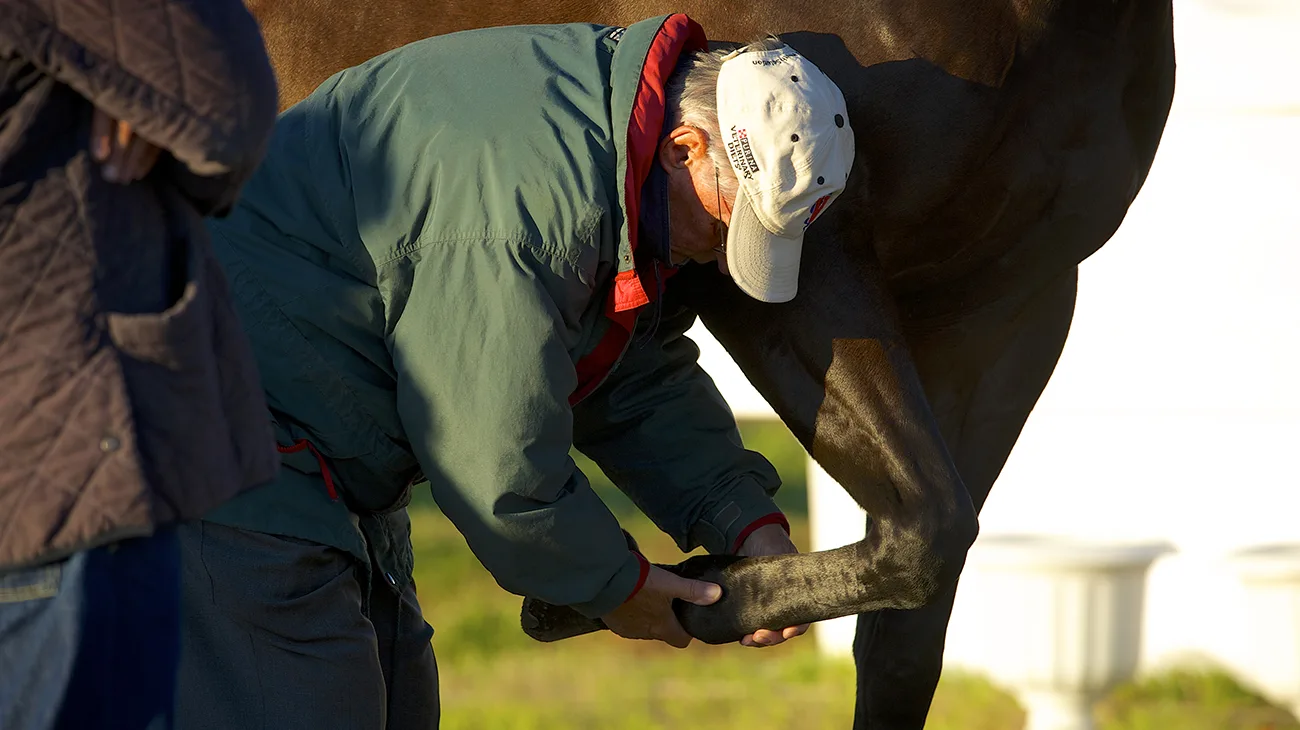
“This is one of the strategic action steps that came out of the Chromatic Fund” said USEF Chief Operating Officer Sonja Keating. “And this is one that we’re really excited about. It was kind of an inaugural summit, if you will.”
The summit convened a diverse group of U.S. and international team veterinarians alongside veterinarians involved in research and horse racing. By hosting the summit during the Longines League of Nations and ahead of the U.S. Equestrian Open Jumping Final, the event was able to leverage the travel of international vets to Florida and maximize attendance. Dr. Tracy Turner, DVM, who is the president of the AAEP, facilitated the conversation.
“We recognize how important it is that we address the future and where we’re going as a sport,” Keating said. “We are a global sport, and we want to make sure that we’re getting as many different perspectives as possible—particularly from some of the best experts in the world—and gathering all of them around the table to have some of these discussions was really important to USEF.”
Keating said that the event was structured as a dialogue in order to invite the full expertise of the veterinarians who attended.
“We really wanted the opportunity to cross-collaborate and have open discussion on ideas,” she said. “It was a very open dialogue, conversation format.”
Turner, along with USEF Chief Veterinary Officer Dr. Stephen Schumacher, DVM, and Dr. Kent Allen, DVM, were the contributing writers who produced the white paper detailing the group’s discussion of equine diagnostics and treatment. The paper sums up their discussions on the following topics:
- Defining ‘Fitness to Compete’: A horse’s fitness to compete is not necessarily determined by a soundness exam, but varies by horse and competition. Veterinarians discussed the need for increased authority to discern between lameness with pain and asymmetry that is consistent for a particular horse. Vets discussed desiring the ability to overrule a ground jury with a soundness evaluation.
- Regular Examinations: Regular examinations should be performed at least quarterly, but increased to every two to four weeks during periods of intense competition. Consistent exams help veterinarians set a baseline for the animals in their care, and should include wellness, nutrition and tack fit. While confidentiality is valued, open dialogue and thorough record-keeping between veterinarians on the care team is also essential.
- Muscle Recovery: While there are many perceived tools used to assist in muscle recovery, the veterinarians agreed that rest is the most critical factor for promoting recovery. Unfortunately, rest is often overlooked during competition. The writers added that “the arbitrary use of fluids with vitamins and minerals added is not acceptable.” (In the wake of Chromatic’s death—which came after a treating veterinarian injected him with an intravenous cocktail of Selevit, Traumeel, Legend, Adequan and arnica meant to aid post-competition muscle recovery—the Fédération Equestre Internationale passed a rule this year prohibiting the use of injectable vitamins and minerals during competition.)
- Overtraining Risks: A major risk to horse health is the overtraining and excessive competition of equine athletes. Vets highlighted the use of wearable technology as a means to monitor horse performance and determine “how a horse may be exceeding or failing in response to training and competition.”
- Standardization of Treatment Options: Regulation and allowance of certain treatments varies between competitions. Criteria for these interventions should be further studied and standardized.
- Therapeutic Options: Therapeutic interventions are not benign and procedures like intra-articular joint injections should not be considered “maintenance.” Veterinarians should only inject joints after a diagnostic exam deems the procedure necessary, following a conversation with the horse’s team about risks and expectations. While shockwave therapy can be a tool for the treatment and rehabilitation of injuries, it should be administered only with a veterinarian and not in the days leading up to competition.
- Homeopathy and Supplements: Some homeopathic treatments may seem to have the appearance of effective treatment, but those treatments are unregulated by the Food and Drug Administration and should not be considered a viable treatment option. Similarly, supplements are also unregulated and some ingredients can be dangerous.
- Vitamins: Carefully incorporating vitamins into a diet provides nutrients that “are essential for energy metabolism, muscle function, bone integrity, and immune response,” but administering vitamins is not without risk. Some vitamins are known to negatively interact with others, requiring thoughtful veterinary guidance to avoid negative outcomes or deficiencies.
Following the event, Keating said that the positive response from participants has encouraged the organizers to consider future summits. She said the frequency of events will be determined at a later date.
“The feedback we got following the summit was very positive” Keating said. “In fact, because USEF hosted it, our CEO was present at the summit, and several of the vets afterwards thanked us for the opportunity to participate, commented on how helpful, or additive, that they thought that it was, and expressed an interest in doing it again.”
Veterinarians also identified gaps in knowledge where future research initiatives can further the welfare of competition horses. Participants named the need to quantify how competition frequency impacts a horse’s success, injury risk and career longevity. They also suggested that future research focus on identifying biomarkers that signal a horse’s need for recovery support, and evaluating how wearable technologies can monitor fitness, environmental stress and travel-related strain.
In the wake of Chromatic’s death, his namesake fund will help to fund research that aims to protect horses at every level of the sport. “There is already a small designated group of people within this Chromatic Fund and AAEP that will help oversee where those research monies are awarded,” Keating said.
To donate to the Chromatic Fund, visit FoundationForTheHorse.org/support/chromaticfund.
The post USEF Veterinary Summit Outlines Best Practices For Sport Horse Care appeared first on The Chronicle of the Horse.
]]>The post USEF Targets Barbiturates, SARMs And Anticonvulsants In Hair-Testing List appeared first on The Chronicle of the Horse.
]]>It includes three types of drugs—barbiturates, selective androgen receptor modulators (SARMs) and anticonvulsants. Of those, barbiturates and SARMs are completely prohibited, while there are four specific anticonvulsants that are prohibited.
Veterinarians say the drugs on the new list should never show up in horses that are being ridden and competing. One, the barbiturate pentobarbital, which is commonly used in humane euthanasia, should never show up in any living animal, and the others are only very rarely used in horses. Although there might be times—under very specific circumstances—where a veterinarian would reach for one of them for a legitimate medical reason, those situations would not arise in horses who are healthy enough for a show ring, experts said.

Hair testing goes farther back in time than blood and urine testing do—potentially 12 to 18 months, depending on the hair sample—to detect the presence of a drug. (Read more about the science behind hair testing here.) The rumored use of pentobarbital in show horses was the primary impetus for the addition of hair testing, USEF Chief Veterinary Officer Dr. Stephen Schumacher, DVM, said. Although pentobarbital would be detected in blood samples if it was given to a horse at a show, “the interest in looking further back is because we’ve also had some information that people may be using this in their horse a little further out from competition and still gaining that kind of advantage,” he said.
“What that rule change allowed us to do is just provide another tool in our arsenal to try and protect horses, frankly—especially when we had information about this substance [pentobarbital] potentially being used. There is no therapeutic use for this; this is a drug that’s used for euthanizing horses.”
Schumacher added that some USEF members have voiced concerns that, with hair testing, they could be unfairly implicated in drugging if they purchase a horse that was given prohibited substances in the past. However, he said, USEF is already equipped to investigate such cases, because some drugs can show up in blood or urine testing for longer periods of time as well. Reserpine, for example, can be picked up in blood samples a long time after it is administered.
Here’s some additional information about the specific prohibited drugs that hair testing is being used for and what they do:
Selective Androgen Receptor Modulators (SARMs)
SARMs can be thought of like anabolic steroids, said Dr. Emilee Lacey, VMD, MS, a large animal internal medicine specialist at Palm Beach Equine Clinic (Florida). Both drugs bind to androgen (sex hormone) receptors in the body, but SARMs bind to those in muscle and bone, while anabolic steroids bind to receptors throughout the body.
“[SARMs] won’t have as many androgen receptor side effects, like classic androgen steroids would. Those drugs will bind pretty indiscriminately to androgen receptors across the body,” said Lacey. “The point of [SARMs] in horses would be to really increase muscle mass, increase bone mass, so it really is a performance enhancing medication.
“Now I think that there’s a time and a place to use those drugs, particularly let’s say you have the equine athlete that maybe has gone through an injury and is really down on muscle mass, or even a horse that’s been going through some rehabilitation processes. But never would we recommend those drugs to be used regularly. [They’re] very, very, very rarely used,” she said.
Horses with a legitimate therapeutic need for these drugs wouldn’t be in any condition to be ridden or shown, Lacey emphasized. “I’m talking severe decrease in muscle mass, something with a very low body condition score. And even then, we’d be pretty cautious to reach for those drugs.”
Barbiturates
Most horse owners are familiar with the barbiturate pentobarbital, which is commonly used today to perform humane euthanasia, but originally the drug had some other medical uses. Newer drugs have largely replaced it in that capacity, however.
“It’s really like an old anesthetic class of drugs. We really don’t use them much,” Lacey said.
“Phenobarbital, another example you’ll see on [the USEF list of prohibited substances], can actually be used as an anticonvulsant as well,” she added. “However, if a horse is taking that medication, [the owner] probably should be working very closely with their veterinarian, because [the horse is] taking it because they’ve had seizures. It’s an anti-seizure medication. So again, these drugs really are something that a horse in active work shouldn’t be receiving.”

Seizure disorders in horses are extremely rare, much more rare than in dogs and cats, Lacey said. But one known equine seizure disorder is juvenile idiopathic epilepsy in Arabian foals from Egyptian lineage. It generally occurs in horses under a year old, and although the cause is not known it’s thought that there’s a genetic component.
“A lot of the time these horses will grow out of this disease process, but they may be on a tapering course of phenobarbital over that time, until they grow out of having seizures,” she said. “So there are medical reasons that we may choose to put a horse on phenobarbital, for example. But again, anytime a horse is on this drug, the owner really should be working pretty closely with their veterinarian.”
Barbiturates, particularly pentobarbital, also have a huge environmental impact, Lacey said.
“There are some risk factors of euthanizing a horse with pentobarbital and then the animal’s body being available for wildlife to come and consume,” she said. “So again, there’s just a lot of risk around giving that medication, not only as a euthanasia solution, but even more so if they’re giving it to a live animal. This is definitely a drug that should not be given to a live animal.”
Anticonvulsants
Four specific anticonvulsant drugs are prohibited by USEF: felbamate, phentermine, phenytoin and valproate.
Like barbiturates, anticonvulsants “are going to be prescribed when an animal has seizure issues and neurologic disease,” Lacey said. “So, again, a horse really shouldn’t be competing if they’re on those drugs, without veterinarian advice, that is.”
Phenytoin can sometimes be used for neuropathic pain, Lacey said.
“It’s unusual,” she said. “I think we just have many more, better drugs. That drug is probably the one that would be used for horses that basically have pain. … It’s used more in humans than it is in horses, but I’ve used it in horses that have been self-traumatizing due to really itchy skin or really diseased skin.”
Lacey noted that while there might be some rare instances where these drugs would be prescribed for a legitimate reason, in the interest of safety, those reasons would—or should—generally preclude a horse from being shown in the first place.
“I’m not as concerned with a horse receiving this medication if they have a medical need for it,” she said. “I’m more concerned for the safety of the horse and the rider, if the horse has a seizure condition and someone’s trying to ride it.”
”The biggest thing is, I think, hey, this list of drugs came out to raise awareness, but also to protect the horse and rider at the end of the day. So I don’t think it’s something to be scared about,” Lacey added. “Rather, it’s something that I think the USEF is doing a good job by monitoring and making sure that [people are] not promoting the use of prohibited drugs, but really just keeping the horse and rider in mind, because, again, any of these drugs are medications that really shouldn’t be given to an actively [working] horse.”
The post USEF Targets Barbiturates, SARMs And Anticonvulsants In Hair-Testing List appeared first on The Chronicle of the Horse.
]]>The post Opinion: We Know Microchips Save Lives, But Can USEF Do Even More? appeared first on The Chronicle of the Horse.
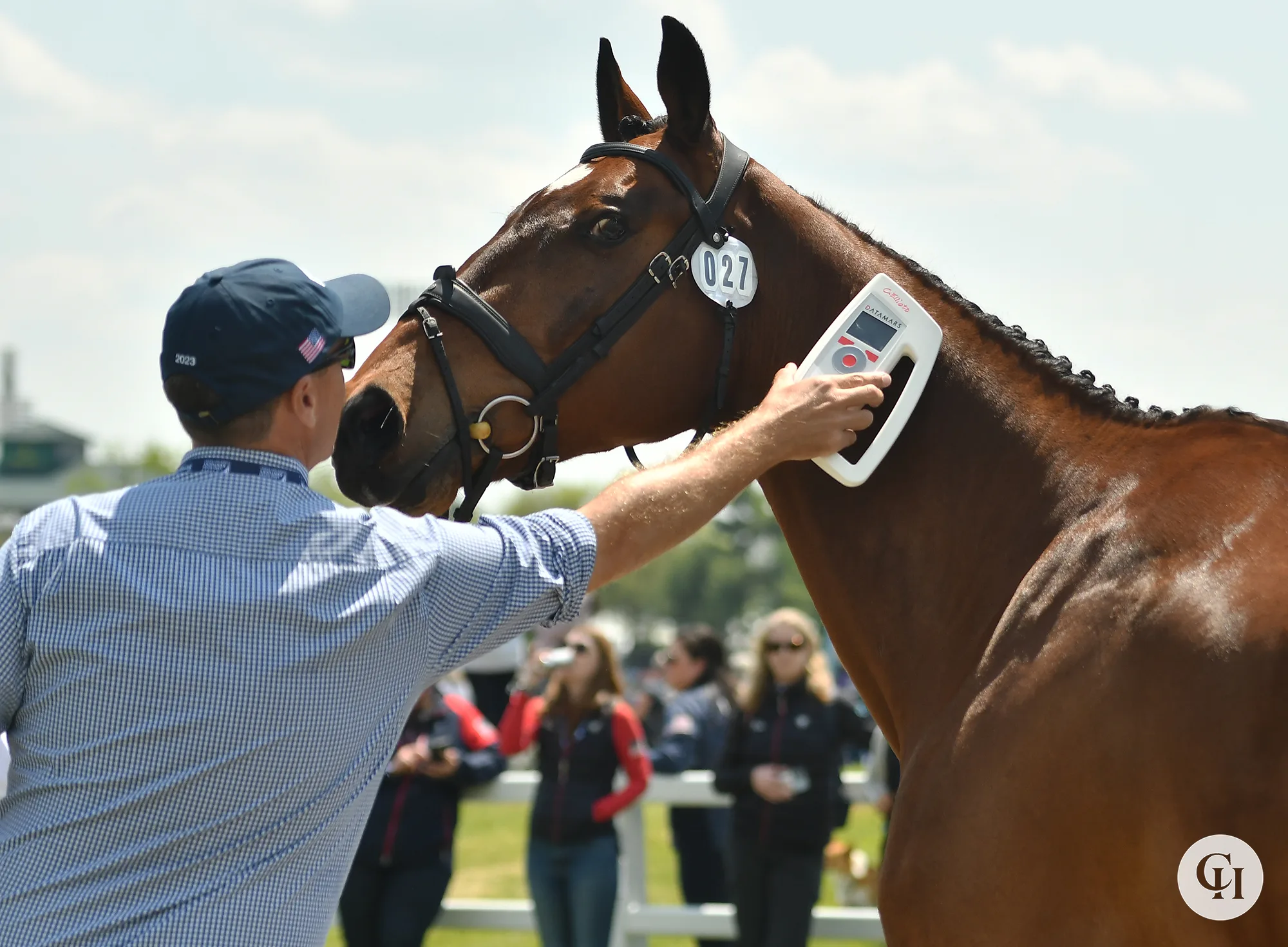
]]>Beginning Dec. 1, microchips will be mandatory for all horses competing in U.S. Equestrian Federation-licensed or -endorsed competitions. The new rule, intended to improve biosecurity and increase traceability, has the potential to do so much more. It could help provide a safety net for former show horses in need of a soft landing.
This new rule significantly expands the reach of a previous rule, in effect since late 2017, which has required microchips only for horses competing in the hunter and jumper rings. What excites me the most about a USEF “microchips for all” policy is the opportunity it gives for our national federation to truly step up in a meaningful way for its registered horses. When a USEF member looks up a registered horse, they already can access a large amount of data about the animal, including current and previous owners, breeding, breeder, breed registry affiliations and show record. But what if USEF followed in the footsteps of The Jockey Club and the U.S. Trotting Association by enhancing its database to also link a horse to previous owners, breeders, or other connections who are willing to help in a time of need?
The Jockey Club, which is responsible for verifying the identity and provenance of every racing Thoroughbred in North America, established Thoroughbred Connect in 2011. The voluntary program allows people interested in providing aftercare to a particular animal to link their contact information to the horse’s record. Given that any Thoroughbred trained for the track should have either a lip tattoo or (since Jan. 1, 2020) a microchip, identifying animals is generally easy; any owner or rescuer can search the Thoroughbred Connect database with a free log in.
Standardbreds who are registered with the U.S. Trotting Association have the Full Circle Program, established in 2012 and modeled after similar initiatives spearheaded by the American Quarter Horse Association and the American Morgan Horse Association. Any person, USTA member or not, interested in providing a safe landing for any Standardbred can simply submit the Full Circle application form to the program. Standardbreds are typically identified by a unique freeze brand on their neck, which can be looked up for free on the USTA website; if a horse is registered with the Full Circle program, its logo will appear next to the animal’s name on his record, and the USTA will provide the relevant contact info upon request.
People working in equine welfare will tell you that some of these groups were forced to step up in this way, for the simple fact that their animals were readily identified due to their tattoo or brand. Although not externally visible, microchips are also a fairly permanent and unalterable form of identification. With their use now mandatory for any horse destined for a USEF show ring, all of these competition mounts—some of whom would have been much harder to trace otherwise—can readily be identified. When those animals end up in marginal circumstances, the horse-loving public wants to know who to blame, and why nothing was done to help.
A professional quality microchip scanner costs between $300 and $400, and many rescue groups and other equine advocates are beginning to use them routinely. If USEF were to create a method for their registered horses’ records to include a list of “equine emergency contacts” who would be willing to provide a safe landing for that animal, such a list could provide a starting place for owners, rescues, and others who network horses at risk to connect with the people most likely to help.
Thanks to ongoing research provided by the United Horse Coalition’s Equine Welfare Data Collective, we know that the most common reasons horses end up needing assistance from outside organizations all have to do with the owner. When an owner’s health, finances or living situation change, they are often faced with difficult choices regarding the continued maintenance of their animals large and small—and one thing animal advocates will tell you is that bad luck does not discriminate. An outstanding pedigree, a 50-page show record, even a history with some of the best in the sport, cannot prevent a horse from falling through the cracks.
If you don’t believe me, read our recent story about Flicka, a former champion 3’6″ hunter who was identified in a Texas auction pen thanks to her USEF microchip. Another recent situation involving a retired performance horse named Devout is still ongoing—and perhaps could have been avoided altogether with an accessible USEF-managed database of “equine emergency contacts.”
Devout’s Story
On July 5, a volunteer with Auction Horses Rescue, a Southern California-based non-profit, was at Mike’s Livestock Auction in Mira Loma, California, when she noticed a handsome gelding wearing corrective shoes who seemed a bit out of place. Representatives from AHR try to identify as many animals as possible at sales through brands, tattoos or microchips. This tall, elegant fellow didn’t have a tattoo, but he did have a microchip.
AHR founder and president Megan Gaynes knew the chip number did not belong to The Jockey Club, as its chips all start with the same four digits, so they suspected he might be registered to USEF. But Gaynes is not a USEF member, and she couldn’t initially figure out how to use a microchip number to look up a horse on the federation’s website. Instead, she texted several contacts she knew to be members. One, Shannon DeBuiser, was able to match the chip number to a 14-year-old gray Thoroughbred gelding named Devout. They soon learned he had a USEF horse report 11 pages long, with results in everything from adult hunters to equitation classes to international hunter derbies.
Having recently taken in several special-needs cases, the organization was not in a position that night to assume the care of another auction intercept, and with the monthly sale scheduled to begin in just a few hours, time was of the essence. Gaynes posted Devout on the AHR Facebook page in hopes of quickly reaching any of his former connections.
“We posted all his info, and the name of his last show connection, which we normally don’t do,” Gaynes said. “We didn’t want it to be taken we were blaming her, we were just trying to get in touch with her.”
And through the magic of social media, word did get back to one of Devout’s last contacts, who responded to AHR’s pleas as soon as she heard them. But it was already too late. The auction ran ahead of schedule that night, and Devout had been sold.
In the days that followed, word reached many of the other names on Devout’s record, and they also came forward with offers to help. The good news is that, at least for now, Devout is safe with the buyer, and AHR is working with them and the staff at Mike’s Auction to hopefully reunite the horse with one of his former “people.” But Gaynes said if she had known Devout had a long list of former contacts willing to take him back, she would have handled things differently that Saturday night.
“I would have figured out a way to pay the fee, and count on the fact that somebody was going to want him the next day,” Gaynes said.
After learning about Devout’s story, I reached out to USEF and asked if they would consider making their microchip lookup readily available to non-members. Natalie Voss, corporate communications director for USEF, replied via email that they are a supporting organization of the American Horse Council’s microchip look-up service, which allows anyone to search a microchip number across horse registry databases.
“If a number entered matches a horse in our database, the user will be told we have a match and will receive the most current information we have about the horse, including registered name, sire and dam, foaling year, sex, and color,” Voss shared. “Owner information is accessible to users who log in with a USEF membership. You can sign on as a ‘fan’ free of charge, which allows users to see the last known owner information for a registered horse.”
But Gaynes only learned about the USEF fan membership option after the fact, and even once they knew who he was, not being able to directly access contact information for any of Devout’s “people” further slowed the process.
“It took time to make the post, it took time for people to see it, then to get a hold of the people it was regarding,” Gaynes said. “I think every one of Devout’s prior owners ended up contacting us, and they all wanted to rescue him. Can you imagine if all of their names and numbers—if all of that was there? We could have quickly reached each and every one of them, and had multiple homes lined up for him.
“They need to make it an easy thing to find, with a drop-down menu at the very top of the page,” she continued. “All the rescues can click on that, look [the microchip] up, and find out immediately who the horse is.”
The Time Is Now
Even with the availability of programs such as Thoroughbred Connect or Full Circle, there likely will always be horses that slip through the cracks. But my hope, if the USEF should choose to create a similar voluntary program of their own, is that we can catch more horses before they end up in nearly impossible circumstances.
Imagine for a moment that an owner of a USEF-registered horse suffers an unexpected life setback and needs to rehome him—and they can easily access a list of people who cared enough about that horse to offer him a permanent safety net. While the onus will always remain firmly on the owner of record to make the right decision for their horse when the time comes—whether the placement is with a former owner, an aftercare program, an equine rescue, or another situation—such a database gives them a starting place, a list of names most likely to be willing to help.
I will be honest: I’m pretty excited about this idea, and I asked USEF if it was feasible to create a searchable database of former owners with contact info, linked to a registered horse’s record. Here is what they had to say:
“Currently, US Equestrian does not have a field in a horse’s registration that would allow someone to attach their name and contact information to the horse’s record as a lifetime care contact,” Voss wrote. “Since receiving your inquiry, this idea has become a topic of internal discussion across departments as we figure out how we could potentially deploy an option like this to assist horses in need of a soft landing.”
Almost every former owner whose horse ends up in a marginal situation will tell you that they never imagined it would happen to them. The time is now to take this vital step, to change the end of the story for horses like Flicka and Devout from challenge and despair to hope and love.
Chronicle contributor Christina Keim writes the Chronicle’s popular “From Rescue to Ribbons” digital series, and the author of the new book “Unwanted: The Causes and Effects of America’s Horse Population Crisis,” available now at www.trafalgarbooks.com.
The post Opinion: We Know Microchips Save Lives, But Can USEF Do Even More? appeared first on The Chronicle of the Horse.
]]>The post Emergency Preparedness Planning: Don’t Wait Until It’s Too Late appeared first on The Chronicle of the Horse.
]]>Immediately, the couple sprang into action. Katharine soaked their two barns with a hose, then they grabbed halters from a well-organized rack and moved all of their equines from the track system that lines the edge of their property into a centrally located round yard. This area, made of pipe panel fencing and purposefully kept free of flammable material, provided a secure and relatively fire-proof place for the animals to stay while the blaze was extinguished. By the time wind-blown embers began melting through the electrical tape on the track system, the entire herd was safely relocated, and the doused buildings did not ignite—meaning Katharine and Mark could concentrate on putting out flames elsewhere.
“It was just the two of us there that day, and it went like clockwork,” said Katharine. “We knew which horses were the leaders, the horses the others would follow. Once we had everybody in the round yard, we could start pouring water in the bucket of our big tractor and dumping it on the fires burning on our fences.”
Katharine knew firsthand that without a plan, the outcome that day could have been different. Decades ago, she ran a riding school in northern New Mexico where she cared for 14 horses housed in a traditional wooden barn. One day, a large brush fire that had already blazed through three counties began to approach the property, and Katharine had no choice other than to set the horses loose and hope for the best. Fortunately, all of the animals, including a mare and foal, survived—but she knew they had been extremely lucky. When Katharine had the opportunity to design her new sanctuary from scratch, she did so with disaster-planning in mind.
“It was one of my more terrifying experiences,” Katharine said of surviving the previous fire. “But because I’d been through that, when we were planning here, everything I could think of, we tried to cover and be aware of. Because there is nothing more frightening than not being able to keep your horses safe. We’ve written it up in our evacuation and emergency plan.”
For many equine managers, emergency preparedness planning can feel like a daunting project. Emergencies often develop quickly, and when you have no plan at all, a safe outcome becomes much more difficult.
“When we are in an emergency, we don’t rise to the occasion; we fall down to the level of our preparation, and that is especially true when animals are involved,” explained Bettyann Cernese, a Pepperell, Massachusetts-based certified Equi-First Aid USA instructor who teaches courses on equine facility disaster planning across the country. “We need to have some level of preparedness, because disasters don’t send a warning.”
But there are resources available to help facility managers and owners craft plans uniquely suited to their needs. While we can’t predict every eventuality, knowing the type of incidents most common in your area, identifying and acquiring the necessary resources, and practicing in advance can all help you safely weather the worst of storms.
Know Your Opponent
The first step in creating an emergency preparedness plan is to determine the top three natural disasters or other incidents most likely to affect your area.
From there, evaluate the topography and logistics of your property to identify how these types of events are likely to affect you, and make a list of what would need to happen to mitigate those variables. Are you located in a floodplain on the Gulf Coast that will most likely require evacuation in a hurricane? Are you in a region that frequently experiences high winds, meaning that buildings and equipment storage need to be rated accordingly? Are you in an area that receives heavy snow, and need to plan for clearing loads off roofs in the winter? The types of hazards most often seen in your region will dictate the type of response you need to be prepared to launch.
“We hear about all these disasters happening all over the world, and it’s overwhelming,” said Cernese. “We focus on helping people pick the things most likely to happen. Tailoring the plan to local risk is essential. A barn in California should be preparing for wildfire, and one in Vermont for blizzards and flooding. It’s not a one-size-fits-all situation.”
But planning for the most common natural disasters in your area will also set you up to respond to unique or unusual events that may impact your facility, such as a lightning strike, a barn fire or a lost horse. Traci Hanson is the equine program director for the Global Federation of Animal Sanctuaries, an Arizona-based group that offers certification to organizations around the world caring for equine and other barn animals or wildlife species. All GFAS programs must complete a disaster preparedness plan as part of their certification process, and in doing so, members become ready to handle anything from an escaped animal to a human health emergency to civic unrest.
“We focus mostly on natural disasters, like wildfires or floods, but a lot of the steps taken to prepare for these incidents can apply to other disasters,” said Hanson. “It is about trying to get groups to think ahead, plan ahead, and think about what they can do to get ready.”
When Disaster Strikes
When it comes to navigating a natural disaster, experts share that your emergency preparedness plan needs to be flexible and able to address three different response modes: shelter in place, local evacuation, and long-distance evacuation (see sidebar). Each option comes with its own considerations and planning requirements.
Making the decision to shelter in place is contingent on there being a safe location on the property for human personnel to ride out whatever is occurring, as well as space to store sufficient resources (such as feed, medical supplies and water) to get through a minimum of seven to 10 days. Among these resources, accessing water can quickly become the most critical.
“If you lose power, how will you get water?” said Hanson. “Is there a generator available, or are there ways to collect water prior to the event? We don’t require our groups to have a generator, but we do require they have an alternative, whether that is a cistern or permanent or mobile holding tank.”
When a significant weather event is bearing down on your region, deliveries may be delayed or suspended, making it impossible to stock up on your horses’ essentials. Hanson notes that it is best practice to not let consumable supplies, such as feed, run too low before ordering more.
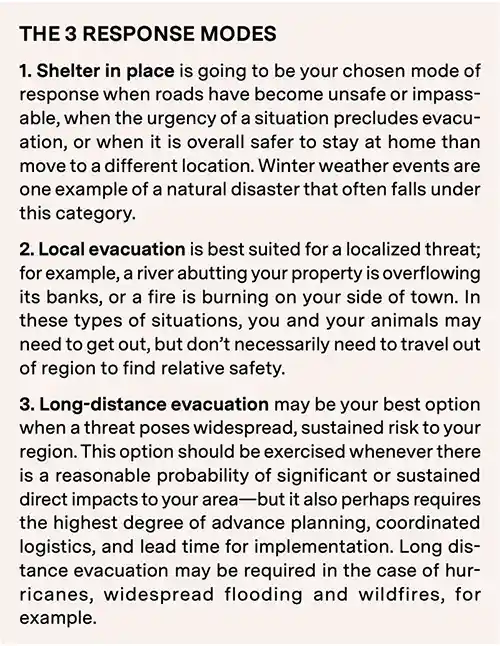
“Don’t wait until your inventory is nearly depleted,” Hanson said. “Say you know 10 bales of hay gets you through five days. Re-order when you get down to five bales, so you have that on hand in case of emergency.”
If you choose to shelter in place, communicate that decision with others—both in your local area, and further afield.
During emergency conditions, internet and phone services are often impacted, and it may not be possible to call for help if conditions deteriorate. Pre-planned emergency contacts who will know that you are still on site can reach out to rescue teams on your behalf for a welfare check if communication is lost.
When it comes to coordinating a successful evacuation—whether local or long distance—pre-identifying critical resources, including both equipment and personnel, is essential. In most cases, you will need access to trailers and pre-arranged locations set up to receive your animals, as well as familiarity with several routes to get there. Tow equipment and trailers must be kept tuned up, gassed up, and should be hitched and loaded with supplies even before the final decision to evacuate is made. Know who you will call to drive a second rig, or who can come to your farm to help you load up.
“You need contingencies for road closures and power loss,” said Cernese. “How many animals do you have, and how much trailer space do you have? If you leave to take some out because you don’t have enough trailer space, how are you going to get back if the roads are closed?”
If you are going to evacuate, you need quick and easy access to each horse’s medical paperwork, including Coggins test and vaccination records, as well as registration papers (if relevant), which can aid in identification. Experts recommend storing these items in paper form in both your tow vehicle and trailer, as well as saving them digitally.
If you are not sure where to start in terms of finding shelters set up to receive large animals in your region, consider contacting your local fire department, veterinary clinics, agricultural extension offices and large-animal savvy neighbors. Further, don’t be afraid to tap into your extended network to locate the resources you need. When designing the Dharmahorse Equine Sanctuary emergency preparedness plan, Katharine invited the local fire marshal for an on-site visit to discuss specific liabilities.
“We talked about storage of flammable materials, wiring in buildings, even what the different color of the fire hydrants meant in terms of the amount of water that comes out of them and which water system they belonged to,” said Katharine. “We talked not just about what to do if a fire comes to you, but how to make it so a fire doesn’t start at your place. He was a great help to me.”
“Even if you are a single barn owner, you need to be connected to facilities in other locations,” noted Cernese. “And if you are a large facility, you still may need to connect with the wider farming community to have assistance with your animals.”
“Every group we work with is a different size, has a different number of horses, and may have different resources available to them,” added Hanson. “For example, maybe they have a donor with land on the other side of town available to shelter horses. But one of your resources could be a neighbor down the road, who has certain equipment and is willing to make it available.”
Regardless of which mode of emergency response you choose, it is smart to individually identify your animals in some manner for the duration of the event. Microchips provide one permanent option, but experts recommend also having a more visible form of identification available for immediate use. Livestock markers, made of a non-toxic, waxy material, often in a bright neon color, can be used to write a phone number on each horse. Some people braid ID tags containing the owner’s contact info into their horses’ manes and tails. Digitally store recent photos of each animal, noting any unique markings, scars, or brands, to assist in proving ownership.
One final, but often overlooked, step is to develop a relationship with your local or state level animal rescue or response team. These groups can have different names depending on where you are located, but should pop up on an internet search. Often, they will have tools available to help you create a plan specific to your region and can help you to identify relevant resources.
Further, when a coordinated emergency response from governmental agencies is required, there is a specific protocol for the deployment of official resources that must occur. If you have a previous relationship with your local or state-level animal rescue team—and they know where you are located, and the number and type of animals you care for—they will be better positioned to get you the timely help you need as part of that coordinated response.
“The key is to not wait until disaster strikes to connect with those people and organizations,” said Cernese.
Practice Makes Perfect
The best written and thought-out plan will do no good if those responsible for executing it are not intimately familiar with each of the steps involved. Not only should your plan be publicly posted and shared with key players—including local emergency responders—experts recommend holding practice drills at least once, if not twice, a year, inviting anyone and everyone who might be called on in an emergency.
“If you have a big facility, and you’re not always there, do the people that are going to be there know your plan?” said Cernese. “Train all the people you possibly can. Do a walk through [to identify] what is working and what is not.”
There are several ways to practice putting your plan into action. Most models involve creating an imaginary scenario, with participants role-playing their response to each variable presented.
This can be done at the facility itself and using the actual equipment available, or as a “tabletop” exercise, using a large map of the facility on which people can point to where resources are located. Often, these drills highlight areas where improvement is needed, and they give planners the opportunity to make corrections, large and small.
“You can act the scenario out as if people are in their actual roles, or you can switch it up, which offers a new or different perspective,” said Hanson. “Another good way to practice is to remove a key person—maybe your barn manager, or executive director—the people everybody goes to for everything. Because if your barn manager is on vacation, and there is an emergency—what are you going to do?”
One excellent way to identify your plan’s weaknesses is to hold an unannounced practice. Instead of proceeding through your facility’s typical routine that day, a mock emergency is announced, and whoever is present is forced to put the emergency preparedness plan into action.
“Yes, it messes up that day, but it is imperative for your team to know, not just in words, what they need to do,” said Hanson. “When you’re acting it out, that’s where you’re going to find the things you didn’t think of. It’s not going to work exactly as you planned—so how do you tweak it? Who are your strong people, and do we need to reallocate those roles? It’s quite telling.”
“Having an emergency plan is not just about the equipment; it’s about being able to make calm decisions under pressure.”
Bettyann Cernese
When she facilitates a mock drill, Cernese sees a range of instinctive responses from participants, even when no actual emergency is occurring.
“We kind of do fight, flight, or freeze responses, or slow processing,” said Cernese. “Some people panic a bit. It really highlights why having situational awareness and emotional regulation is almost as important has having that plan on paper.
“Having an emergency plan is not just about the equipment; it’s about being able to make calm decisions under pressure,” she continued. “Our ability to regulate our own nervous system is one of the most important tools you can bring into a high-stress emergency with horses.”
If evacuation is part of your plan, one additional area of practice is to work with your horses enough that they will load reliably, under stressful conditions, even for someone they may not know. Familiarize your animals with being approached quickly as well as under unusual situations, such as after dark. Be sure to have plenty of appropriately sized halters and spare lead ropes available, at every entrance or exit to your facility.
Plan, Not Paranoia
After their experience with brush fire in 2022, the team at Dharmahorse made a few revisions to their emergency plan.
First, they added more gates to their round yard, so that it was more quickly accessible from anywhere on the property.
Secondly, they prioritized fundraising for a project that was already on their wish list: installing a water line with frost-free spigots around the entire facility.
“It will make you paranoid if you let it, thinking about all the things that can go wrong, but when we had that fire, we knew how to get the horses safe,” said Katharine. “For me, I would rather plan and not need it, than need it and not have planned. Knowing that we’ve been through this before, and it worked, makes me much more relaxed. It kept everybody safe, and it keeps you from panicking in the moment.”
Having a plan—and practicing that plan—can help give equine managers the confidence they need to make the best choices in an emergency, quickly.
“Hope is not a strategy: ‘I hope it never happens to me,’ ” said Cernese. “Having a plan in place isn’t about paranoia; it’s about protecting the lives of the horses we’re responsible for.”
This article originally appeared in the July 2025 issue of The Chronicle of the Horse. You can subscribe and get online access to a digital version and then enjoy a year of The Chronicle of the Horse. If you’re just following COTH online, you’re missing so much great unique content. Each print issue of the Chronicle is full of in-depth competition news, fascinating features, probing looks at issues within the sports of hunter/jumper, eventing and dressage, and stunning photography.
The post Emergency Preparedness Planning: Don’t Wait Until It’s Too Late appeared first on The Chronicle of the Horse.
]]>The post Maine Rescue’s Expansion Makes Room For Novel Domestic Violence Partnership appeared first on The Chronicle of the Horse.
]]>Keyser recognized the potential for the MSSPA, an equine rescue in Windham, Maine, to address a unique and potentially unfulfilled need. The non-profit is one of just a handful of shelters in the region set up to take in equines on an emergency basis, and her question prompted the start of a unique collaboration among RedRover, Seattle-based Greater Good Charities, and Safe Voices, a shelter for victims of domestic violence located in the Lewiston-Auburn area of Maine. In what may be a first-of-its-kind partnership, Safe Voices will notify the MSSPA about clients who may be in need of their services; in turn, the MSSPA will provide temporary sanctuary to horses owned by survivors.
“We are not aware of a formal program like this—which is not to say it isn’t happening, formally or informally—but when I asked the question, RedRover was all in,” Keyser said. “Rover has done work with domestic violence shelters and animal shelters in all 50 states, but they had never worked with horses. They were really excited about this prospect.”
The groundbreaking partnership is just one of the new opportunities made possible by the success of the MSSPA’s “A Safe Place to Land” capital campaign, which is funding the construction of a new intake center on the organization’s 124-acre property. Not only will the new build allow the organization to quarantine as many as 25 horses at once, one paddock will be equipped with privacy screening, ensuring its resident is not easily visible to the general public, and a new electronic gate will restrict after-hours access to the property. Construction began this month, and the organization expects to be ready to receive horses as soon as early 2026.
Although the MSSPA has no hard data to support the level of need for this type of service in the state, officials know the need is there. Last year the organization took in a horse surrendered by the mother of a domestic abuse victim who had been murdered by her partner.
“We don’t know yet how many horses will come, but this felt like a wonderful aspect of our work that we could expand to, a community that we don’t—at the moment—have a relationship with,” Keyser said.
A Growing Need
Creating unique and collaborative solutions to meet the needs of horses at risk is nothing new for the MSSPA, which for over 150 years has offered shelter, rehabilitation and rehoming opportunities to equines in need. In another likely first-of-its-kind partnership, today the MSSPA primarily focuses its work on providing vital care to every equine seized by or surrendered to state law enforcement—a service it provides without receiving a dime in state funding. On average, its facility is home to 30 to 40 equines in various stages of recovery from neglect, abuse or simple bad luck.
The infrastructure expansion couldn’t be happening at a better time for the organization. For years, the MSSPA’s staff and volunteers relied on two existing barns and a network of run-in sheds, paddocks and pastures. All new intakes must be quarantined for a minimum of 28 days (longer if they develop symptoms of contagious disease) and are brought up to date on vaccinations, blood work and other basic health screenings before being introduced to the main herd.
But in the past five years, the organization has seen a steady increase in the frequency of seizures, with a concomitant rise in the average number of animals taken at once. The MSSPA has even been called upon to assist organizations from other states. This spring, it received six Friesians taken from a farm in Vermont, and officials anticipate that similar situations will continue to arise in the future.
“As the economy becomes more challenging, as we head into winter and people are wondering if they can feed all their animals—we pay attention to all of that, because that’s when we start to see more frequent seizures,” Keyser said. “By the time they are seized, these horses are extremely medically challenged. They are never in good shape. The need to get them safe, comfortable, and minimally moved is at the utmost.”
In 2021, the limitations of the MSSPA’s existing facility were brought sharply into focus when it accepted the largest single intake in its history—20 severely compromised animals seized by state law enforcement. Staff were forced to get creative to accommodate the new animals’ immediate needs, while still keeping the rest of their equine residents safe. It was in managing these animals’ quarantine and recovery that the need for a dedicated, purpose-designed intake center came into focus.

“Our average seizure used to be one to three horses, and now it is easy to get five, eight, even 10 horses at once,” she continued. “The plan is to be ready, because the call could come in.”
In 2022, the MSSPA received a grant from IDEXX that helped to fund planning the new eight-stall intake center, dedicated paddocks and pastures with run-in shelters, all designed with biosecurity in mind.
“This will make it so much more efficient, and will contain the intake and quarantine work of receiving these animals, for the safety of the incoming horses, for the safety of staff, and for the safety of the resident herd,” Keyser said.
Building Community To Build Connection
Several years ago, the McCulloch family stopped by the MSSPA for a visit, and they were inspired by the work they saw being done there. As a child, family patriarch and Maine native Dave McCulloch attended Standardbred races with his father; he always wondered what happened to the horses when they were done with their racing careers. Thanks to the state’s active Standardbred racing community, the MSSPA is almost always home to a few ex-racers who found themselves in need of care upon retirement. After visiting the farm, McCulloch knew he wanted to help.
In April, the family made a lead matching gift to the “A Safe Place to Land” campaign, contributing $500,000 to the project’s $1.5 million total cost. The new structure will be named the McCulloch Family Barn in their honor.
“That was the memory he had in his heart when he was considering this,” Keyser said. “When that gift came through, I was bowled over by that kind of generosity. The process has been so magical, and a good reminder that you never know what a visitor to the farm who leaves feeling moved will do.”
As the MSSPA staff looks forward to the completion of the new intake center later this year, they know it represents a fresh start and hope for the horses it will soon serve.
“We want them to walk off the trailer, and into this barn, and just let them begin to heal—and that’s what’s going to happen,” Keyser said.
The post Maine Rescue’s Expansion Makes Room For Novel Domestic Violence Partnership appeared first on The Chronicle of the Horse.
]]>